.svg)
The Concrete Is Ready. Is Your Delivery Operation Ready Too?
Reported By
Code
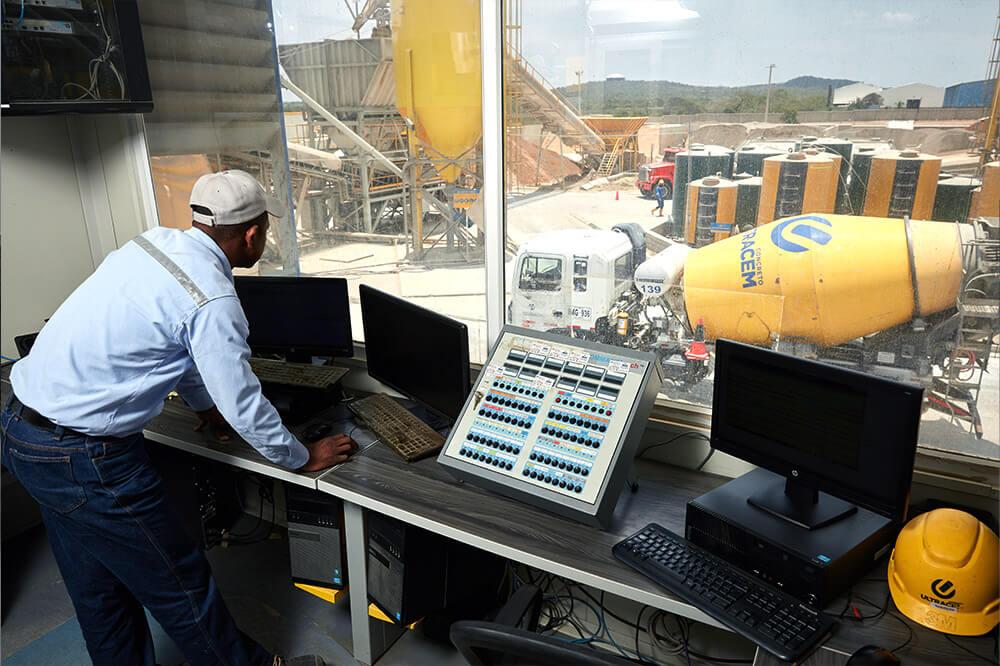
The Concrete Is Ready. Is Your Delivery Operation Ready Too?
Ready-mix concrete is different from many products a business sells.
You cannot simply manufacture it today, put it on a shelf, and ship it next week.
Once concrete is batched, the clock starts.
The plant needs to produce the correct mix. The right quantity needs to leave the plant. A mixer truck needs to be available. The driver needs to know where to go. The delivery needs to reach the construction site at the required time. The site needs to receive the correct volume. And the material needs to meet the required quality specifications.
At the same time, the business has to manage cement, aggregates, additives, fleet availability, orders, delivery records, billing, and quality testing.
That makes ready-mix concrete less like ordinary order fulfilment and more like a coordinated production-and-logistics operation.
Code-Ox's ready-mix concrete solution is designed around that reality, connecting ready-mix orders with batching, mixer-truck dispatch, raw-material planning, delivery tracking, volumetric billing, and concrete testing workflows.
A Concrete Order Is Really a Time-Sensitive Production Schedule
Consider a construction site that requires a scheduled concrete delivery for a foundation pour.
The customer is not simply asking:
“Can you supply 50 cubic metres of concrete?”
They are effectively asking:
“Can you produce the correct mix and deliver the required quantity to our site at the time our construction team needs it?”
That difference matters.
A delayed delivery can affect site labour, equipment utilization, pumping schedules, and the sequence of construction work.
Connect the Customer Order to Production
A ready-mix order should carry the information required by the production and dispatch teams rather than stopping at the sales department.
The ordered mix, quantity, delivery location, required time, and other operational details can become the starting point for batching and dispatch.
Code-Ox's sector solution specifically connects sales orders to batch-plant software so the required recipe can be executed accurately.
The Recipe Cannot Be Treated Like a Product Description
A ready-mix product is defined by its composition.
Cement, aggregates, water, and additives must be combined according to the required mix design.
If the sales order says one thing while the batching system receives another, the problem is not a minor administrative mismatch.
The material being produced may be wrong.
Move the Recipe Information With the Order
Connecting the commercial order to the batching process reduces the need for employees to manually re-enter the same production information.
The order becomes the source from which the relevant production instructions are passed to the batch-plant workflow.
This creates a more direct chain:
Customer Requirement → Sales Order → Mix Recipe → Batch Plant → Delivery
That structure is fundamentally different from simply storing the customer's order in an ERP and then manually recreating it in separate plant software.
The Plant Can Be Ready While the Truck Is Still Somewhere Else
Imagine that the batch plant is ready to load a mixer truck, but the assigned vehicle is still completing another delivery.
The concrete production team may be ready.
The customer may be waiting.
The next truck may not yet be available.
This is where production and transport become inseparable.
Dispatch Has to See More Than a List of Orders
A dispatcher needs to understand the relationship between orders and available mixer trucks.
Which truck is assigned?
Which vehicle is currently in transit?
Which delivery is approaching its required time?
Which truck is available for the next load?
Code-Ox's dispatcher portal and fleet workflow is designed to track mixer-truck transit status and manage delivery timing.
One Delayed Truck Can Affect More Than One Delivery
Ready-mix dispatch is a sequence.
A truck delayed at one site may not return to the plant when expected.
That means the vehicle may miss its next loading window.
The next customer may then experience a delay.
The problem propagates through the schedule.
Track the Vehicle, Not Just the Order
A delivery management workflow becomes more useful when it connects the order to the actual mixer truck responsible for delivering it.
Then the dispatch team can work with live operational information instead of assuming that a scheduled vehicle is still where the original plan expected it to be.
The objective is not simply to know that a delivery exists.
It is to know where that delivery stands in the physical world.
Concrete Has a Different Relationship With Time
Many logistics operations can tolerate a certain amount of flexibility.
Ready-mix operations have tighter constraints.
A delivery that arrives significantly later than planned can interfere with the construction site's schedule and the producer's own fleet rotation.
That makes dispatch timing an operational KPI rather than a simple customer-service detail.
Turn Delivery Time Into a Trackable Workflow
The system can associate a delivery with its planned schedule and monitor the truck's progress through the dispatch process.
When the delivery status changes, the operational team can see that change instead of relying entirely on phone calls between drivers, dispatchers, and site teams.
Code-Ox specifically identifies minimizing transit and dispatch delays as a business benefit of its ready-mix concrete solution.
The Most Expensive Inventory Problem May Be the One You Cannot See
A ready-mix producer needs raw materials before it can produce finished concrete.
Cement, aggregates, and additives have to be available in sufficient quantities.
If aggregate stock falls below the level required for upcoming production, the issue may not become visible until a customer order is already on the schedule.
Plan Materials From Production Demand
Material planning should not be disconnected from the production schedule.
If upcoming orders require significant quantities of a particular mix, the business needs to understand what those orders imply for cement, aggregates, and additives.
This allows replenishment decisions to be based on expected consumption rather than simply reacting after inventory becomes critically low.
Code-Ox highlights MRP-based material planning for continuous replenishment of aggregates, cement, and concrete additives.
Aggregates Are Not Just Another Stock Item
For a ready-mix producer, raw-material availability directly influences production capacity.
A shortage of a critical ingredient can prevent the plant from fulfilling an otherwise confirmed order.
That means inventory management needs to answer a more useful question than:
“How much stock do we have?”
The better question is:
“How much production can our current stock support?”
Connect Inventory to the Production Plan
When production requirements are connected to material planning, management can assess upcoming consumption and replenish critical inputs before they become a production constraint.
This is particularly important when demand changes quickly or several large construction projects require deliveries within the same period.
The Truck Arrived at the Site. Now the Delivery Has to Be Proven.
For a ready-mix producer, delivery is not complete simply because a truck left the plant.
The business needs a record of what was delivered to the site.
That information ultimately matters for billing, customer records, operational reporting, and reconciliation.
Delivery Records Should Reflect the Physical Shipment
A delivery record can connect the customer order with the actual site delivery and quantity supplied.
This gives the commercial team a stronger foundation for invoicing and gives management a clearer picture of what has actually been delivered.
Code-Ox specifically identifies accurate volumetric billing based on site deliveries as a business benefit of its ready-mix solution.
Volumetric Billing Gets Difficult When the Order and Delivery Do Not Match
Suppose a customer orders a particular volume but the actual site delivery records show a different delivered quantity.
The billing team should not have to compare multiple documents manually to determine what the customer should be charged.
Bill From the Delivery Reality
When delivery records are connected to the commercial transaction, the invoicing process can use the actual site-delivery information as part of the billing workflow.
This is especially useful when a business handles many deliveries across different construction sites.
The commercial process then follows the physical operation:
Order → Batch → Dispatch → Site Delivery → Delivered Quantity → Invoice
A Ready-Mix Business Also Has a Quality Clock
Production and delivery are only part of the operation.
Concrete quality needs to be tested according to the required procedures and schedules.
If quality testing is managed separately from production records, it becomes harder to determine which tests belong to which production or delivery activity.
Make Testing Part of the Production Workflow
Quality checks should be associated with the relevant concrete production and delivery records wherever the operational process requires it.
Scheduled testing can then become a defined activity rather than an informal reminder on someone's calendar.
Code-Ox specifically highlights strict laboratory concrete strength-testing schedules as part of its ready-mix concrete solution.
Quality Control Should Not Depend on Someone Remembering a Date
Imagine a batch requiring a scheduled strength test.
If the responsible team member misses the reminder, the issue may not be discovered until someone asks for the test record later.
A structured workflow can instead associate the test requirement with the relevant production or delivery process.
This makes quality management part of the operational system rather than an isolated administrative activity.
What Happens When a Customer Calls About a Delivery?
“Where is my concrete?”
That is a simple question.
Answering it accurately may not be simple if the information is spread across the sales team, plant operator, dispatcher, and driver.
The Answer Should Come From the Workflow
A connected system can give the relevant team visibility into the delivery status.
The dispatcher can see the order.
The fleet workflow can show the assigned truck.
The transit status can indicate where the delivery stands in the process.
Customer communication then becomes based on operational information rather than guesswork.
The Dispatcher Should Not Have to Call Every Driver
Phone calls have their place in logistics.
They should not be the primary database.
If every status update exists only inside phone conversations, there is no reliable operational history.
Capture Status Changes Where the Work Happens
Digital dispatch workflows can make vehicle and delivery status part of the system.
That means the dispatcher can work from the same operational record as other teams rather than recreating information from conversations.
This becomes increasingly important as the number of trucks, sites, and daily deliveries grows.
One Construction Site Can Consume the Attention of an Entire Team
Large construction projects may require multiple deliveries coordinated around site activities.
The concrete producer therefore needs to manage more than individual orders.
The operation needs to coordinate a sequence of deliveries without losing track of which vehicles, quantities, and schedules belong to which site.
Organize Deliveries Around the Customer's Site Requirements
A delivery workflow can associate each load with the relevant customer, site, order, product specification, truck, and delivery status.
This provides a more useful operational picture than maintaining a simple list of invoices.
For the dispatch team, the question becomes:
“What needs to happen next?”
rather than:
“Which spreadsheet contains today's deliveries?”
The Plant and the Office Need to Work From the Same Information
Sales may know what the customer ordered.
The plant knows what is being produced.
Dispatch knows which truck is moving.
Inventory knows what materials remain.
Quality knows what testing is due.
Accounts knows what needs to be billed.
If each department has a different version of the truth, coordination becomes manual.
Connect the Operational Chain
The value of an ERP system in ready-mix operations comes from connecting these activities.
The sales order can trigger the production requirement.
The production requirement can drive material planning.
The completed batch can move into dispatch.
The truck can be tracked through delivery.
The site delivery can support billing.
The production and delivery records can support quality management.
Code-Ox's approach is built around this type of connected workflow, using Odoo and integrations to connect business systems rather than treating each operational function as an isolated application.
What a Connected Ready-Mix Delivery Could Look Like
Consider a contractor ordering ready-mix concrete for a scheduled site pour.
- Order received: Customer requirements and delivery details are recorded.
- Recipe identified: The required concrete mix is associated with the order.
- Production planned: The plant schedule accounts for the required quantity.
- Materials checked: Cement, aggregates, and additives are evaluated against production requirements.
- Batch executed: The order information is passed to the batching workflow.
- Truck assigned: A suitable mixer truck is allocated to the delivery.
- Dispatch begins: The truck leaves the plant and its transit status becomes part of the delivery record.
- Site delivery recorded: The actual delivery information is captured.
- Billing prepared: The delivered quantity supports the commercial transaction.
- Quality workflow updated: Required concrete testing activities are tracked.
- Records retained: Production, delivery, and commercial information remain connected.
None of these steps is unusual on its own.
The challenge is making sure they remain connected when dozens of orders and deliveries are moving through the operation at the same time.
Where Delays Really Come From
When a ready-mix delivery is late, it is tempting to blame traffic.
But traffic is only one possible cause.
The real delay may have started earlier:
- The truck was not available when planned.
- The previous delivery took longer than expected.
- The plant schedule was not synchronized with dispatch.
- A required raw material was unavailable.
- The order had to be re-entered manually.
- The dispatch team did not have the latest status.
- The site delivery requirement changed without reaching the right team.
These are workflow problems.
Fix the Handoffs, Not Just the Symptoms
A good digital system makes the handoffs between sales, production, inventory, dispatch, quality, and finance explicit.
Each team receives information from the previous stage rather than recreating it.
That reduces the number of opportunities for information to be lost between departments.
Why Ready-Mix Needs More Than Generic Inventory Management
A normal inventory workflow can tell a business how many units are in stock.
Ready-mix operations need considerably more context.
The business has to understand raw-material availability, production requirements, batch recipes, truck movement, site deliveries, volumetric billing, and testing schedules.
The finished product is also time-sensitive.
That means inventory, manufacturing, logistics, sales, and quality cannot operate as unrelated modules.
Where Code-Ox Adds Value
Code-Ox's ready-mix concrete solution specifically addresses the operational chain from order to production and delivery.
The sector workflow includes batch-plant integration for recipe execution, a dispatcher and fleet workflow for mixer-truck transit, MRP-based replenishment for aggregates and cement, volumetric billing based on site deliveries, and scheduled concrete strength testing.
Code-Ox's broader Odoo capabilities include implementation, customization, migration, integrations, dashboards and analytics, and AI and automation. Its website also describes integrations through APIs, webhooks, IoT, and EDI.
That matters because ready-mix producers often need more than a standard ERP configuration.
The batch plant may already have its own software.
The fleet may require its own tracking data.
The business may have existing accounting or customer systems.
The objective is not necessarily to replace every system.
It can be to connect those systems so that the information required for the next operational step moves automatically.
The Best Ready-Mix System Connects the Plant to the Road
A ready-mix business operates across two environments.
There is the plant, where materials become concrete.
And there is the road, where that concrete has to reach the construction site at the right time.
The business succeeds when those two environments work as one operation.
The system should therefore connect:
Customer Order → Production → Materials → Batch Plant → Truck → Transit → Site Delivery → Billing → Quality
That is more than ERP data entry.
It is an operational chain.
From Batch Plant to Construction Site, Every Minute Matters
Ready-mix concrete businesses do not have the luxury of treating production and logistics as separate worlds.
A production schedule affects dispatch.
Dispatch affects site delivery.
Site delivery affects billing.
Raw-material availability affects production.
Quality testing affects compliance and customer confidence.
When those relationships remain inside disconnected systems, employees have to bridge the gaps manually.
When they are connected, the business can manage the operation as one flow.
That is the opportunity behind a modern ready-mix ERP strategy.
Build a Ready-Mix Workflow Around the Way Your Plant Actually Operates
Every concrete producer has its own fleet, plant configuration, mix designs, dispatch rules, customer requirements, and quality procedures.
A useful ERP implementation should reflect those realities.
Code-Ox can help ready-mix concrete businesses implement and customize Odoo around batching, material planning, mixer-truck dispatch, delivery tracking, billing, quality workflows, and integrations with existing plant or business systems.
If your team is still coordinating deliveries through phone calls, manually transferring batch information, checking truck locations separately, or reconciling site quantities before billing, the opportunity may not be to work harder—it may be to connect the workflow.
Talk to Code-Ox about building an Odoo-powered ready-mix operation that connects the plant, materials, fleet, deliveries, billing, and quality process in one system.