.svg)
Beyond the Parking Ticket: Building a Smarter System for Space, Access, and Revenue
Reported By
Code
Beyond the Parking Ticket: Building a Smarter System for Space, Access, and Revenue
A parking facility may appear simple from the driver's perspective.
Enter. Take a ticket. Find a space. Pay. Leave.
Behind those few steps, however, there is a much more complicated operation.
The operator has to know which vehicles entered, how long they stayed, what they should pay, which spaces are available, which customers have long-term permits, which barriers are operating, and whether every transaction has been recorded correctly.
Now imagine managing a busy facility with hundreds or thousands of vehicle movements every day.
A few seconds of delay at an entry barrier can create a queue. A failed ticket can require manual intervention. An unrecorded payment can create a revenue discrepancy. A corporate parking contract needs a different process from a one-time visitor.
Parking management is therefore not simply about providing spaces.
It is about coordinating vehicles, spaces, access, pricing, payments, subscriptions, and physical infrastructure.
Code-Ox's car-parking solution is designed around those operational connections, covering ticketing and payments, subscription parking, dynamic space allocation, and integration with barriers, license-plate readers, ticket dispensers, and other IoT equipment.
The Queue Starts Before the Driver Parks
Consider a parking facility during a busy morning.
Twenty cars arrive within a short period. Each driver needs to pass through the entry point, obtain authorization or a ticket, and continue into the facility.
If each vehicle requires manual assistance, even a small delay can propagate backward.
The first driver waits.
The second driver waits behind them.
Within minutes, the entrance becomes congested.
Entry Speed Is an Operational Metric
A parking system should treat the entry process as part of the parking operation rather than as an isolated gate.
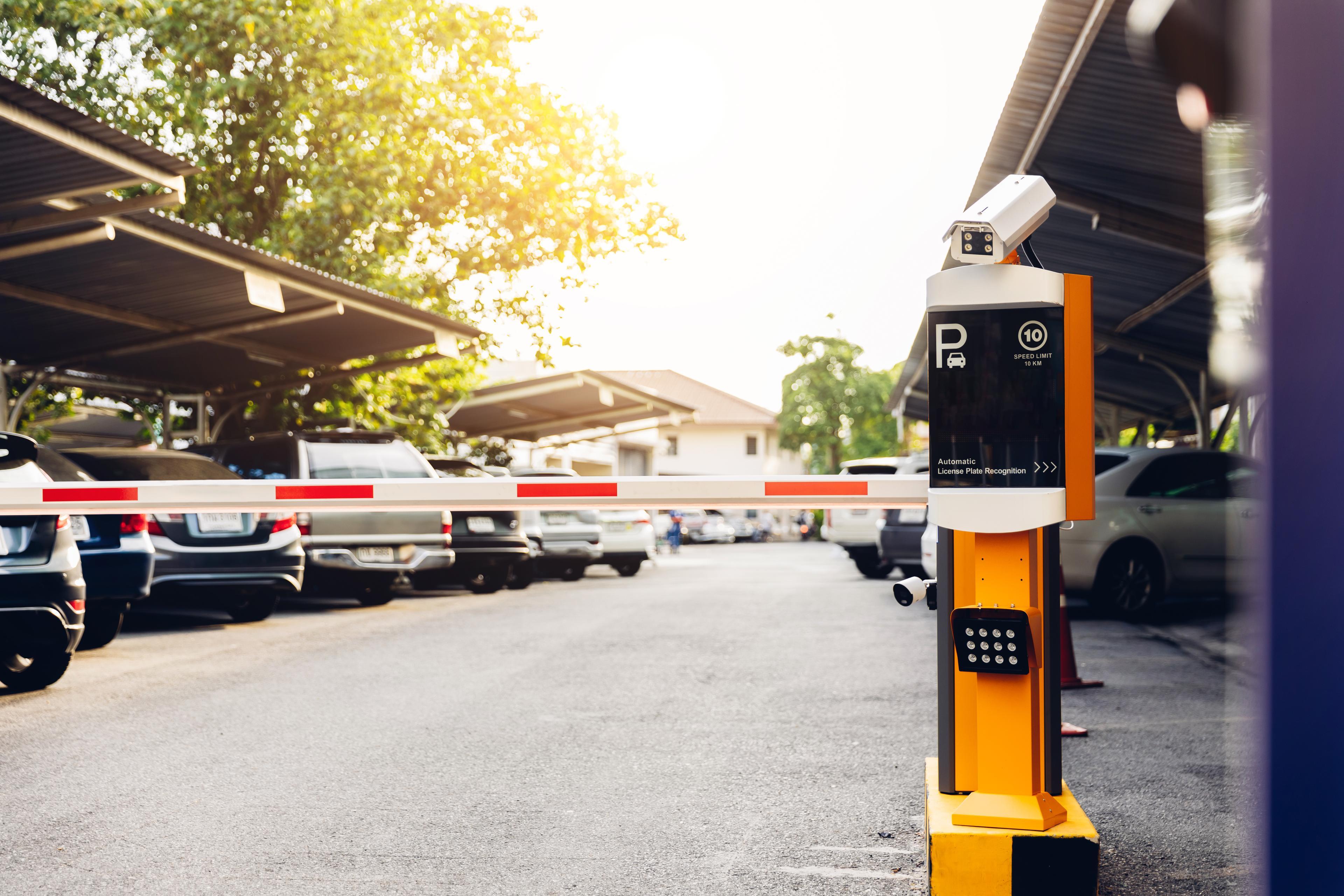
Automated barriers, ticket dispensers, barcode-based entry, or license-plate recognition can reduce the number of manual steps required at the entrance.
The Code-Ox parking solution supports integration with smart entry barriers, license-plate readers, and ticket dispensers.
The objective is straightforward: identify the vehicle or parking transaction quickly enough that the entrance does not become the bottleneck.
A Parking Space Is a Resource With a Clock Attached to It
Unlike many physical assets, a parking space produces value according to how it is used over time.
A space occupied for two hours and a space occupied for ten hours represent different usage patterns.
That makes duration an important part of parking operations.
Pricing Needs to Follow the Stay
Suppose a facility charges based on parking duration.
The system needs to know when the vehicle entered, when it exits, and which pricing rule applies.
Instead of asking an employee to calculate the charge manually, the parking workflow can calculate the amount from the recorded duration.
Code-Ox's sector solution specifically includes duration-based pricing and ticketing workflows.
This creates a direct operational relationship:
Entry time → Parking duration → Applicable rate → Payment
Not Every Driver Is a One-Time Customer
Parking facilities often serve more than occasional visitors.
A residential building may have assigned parking permits. An office complex may have hundreds of employees who park regularly. A commercial facility may sell monthly or annual parking plans.
These customers should not necessarily follow the same workflow as a driver who parks once.
Subscriptions Change the Parking Model
Instead of issuing a new transaction every time a long-term customer enters, the facility can manage the customer's parking entitlement as a subscription or permit.
For example, a corporate contract might define:
- Company or account holder
- Number of parking permits
- Validity period
- Assigned vehicles or users
- Payment terms
- Access rules
Code-Ox's parking solution supports monthly and annual permits for residents and corporate employees.
This makes long-term parking a managed business relationship rather than a collection of individual daily tickets.
The Parking Operator Has Two Very Different Customers
A useful way to understand parking operations is to separate the two primary customer types.
Transient customers need a fast entry, accurate duration calculation, simple payment, and fast exit.
Contract customers need predictable access, subscription management, permit validity, and account-level billing.
Trying to handle both groups through the same manual process creates unnecessary complexity.
Different Parking Products Need Different Workflows
A visitor may receive a barcode at entry and pay according to their stay.
A corporate employee may be recognized through an authorized permit or vehicle record.
The underlying parking operation can support both models while maintaining separate rules for pricing, access, and billing.
That flexibility becomes especially important for facilities serving offices, residential buildings, hospitals, shopping centers, airports, or mixed-use developments.
What Happens When the Facility Is Almost Full?
Imagine a facility with 500 spaces.
At 9:00 AM, 300 are occupied.
By 10:30 AM, 450 are occupied.
At that point, the difference between “parking available” and “parking available somewhere” becomes important.
A driver entering the facility does not want to spend ten minutes searching for a space while other areas remain underutilized.
Space Allocation Should Reflect Current Conditions
Dynamic parking management can use current occupancy information to improve how available spaces are allocated.
Rather than treating the facility as one undifferentiated block, the system can work with defined parking areas, spaces, categories, or access rules.
Code-Ox identifies dynamic parking-space allocation as one of the business benefits of its parking solution.
The goal is not simply to know how many spaces exist.
It is to make the available capacity useful.
“500 Spaces Available” Does Not Always Mean 500 Spaces Usable
Some spaces may be reserved.
Some may belong to monthly subscribers.
Some may be restricted to specific vehicle types or customers.
Others may already be occupied.
A parking management system therefore needs to distinguish between total capacity and operationally available capacity.
Availability Needs Context
For example, a facility could have:
- General visitor spaces
- Corporate reserved spaces
- Resident spaces
- VIP spaces
- Accessible spaces
- Temporarily unavailable spaces
That classification allows the operator to manage capacity according to the actual rules of the facility.
Code-Ox can help model these parking rules within an Odoo-based system and connect them with access, subscriptions, payments, and reporting.
The Exit Is Where Small Errors Become Revenue Problems
Imagine a driver exits after parking for four hours.
The system records the transaction and calculates the applicable charge.
Now imagine the same process being repeated hundreds of times every day.
If payments are recorded manually or through disconnected systems, reconciling the day's transactions becomes more difficult.
Every Payment Should Leave a Record
Automated payment records create a traceable relationship between the parking transaction and the amount collected.
That matters for daily reconciliation, financial reporting, and identifying discrepancies.
The Code-Ox sector page specifically highlights automated payment records as a way to minimize revenue leakage.
The principle is simple:
Vehicle activity should produce a corresponding financial record.
Revenue Leakage Does Not Always Look Like Theft
Revenue can disappear through process gaps.
A ticket may not be recorded correctly.
A payment may not reconcile with the transaction.
A subscription may remain active after its validity period.
A manual adjustment may not be documented properly.
None of these necessarily involves deliberate misconduct.
They are often consequences of disconnected processes.
Automation Creates an Audit Trail
When entry, duration, pricing, payment, and customer information are connected, the operator has a clearer record of how the transaction was generated.
This makes it easier to investigate discrepancies and identify where operational processes need improvement.
Barriers Are Physical Devices. Parking Management Is the System Behind Them.
A barrier can open and close.
That does not mean the parking business behind it is automated.
The barrier needs information about whether a vehicle should be allowed through.
The parking system needs information about what happened at the barrier.
The payment system needs to know what the vehicle owes.
The operator needs to know whether the facility is operating normally.
Connect the Physical Layer to the Business Layer
This is where IoT integration becomes useful.
A license-plate reader can identify a vehicle. A ticket dispenser can issue a parking credential. A barrier can control physical access.
The business system can then use those events to update the corresponding parking record.
Code-Ox specifically supports integration with license-plate readers and ticket dispensers as part of its parking solution.
That creates a bridge between physical infrastructure and business data.
License Plates Can Become the Identifier
Consider a corporate employee who parks every weekday.
If their vehicle is registered with the parking system, the license plate can become a useful identifier for the access process.
Instead of relying entirely on manual ticket handling, the system can associate the detected vehicle with an authorized parking record.
This is especially useful for subscription-based parking where the same vehicles enter and leave repeatedly.
From Ticket-Based Access to Identity-Based Access
The underlying concept changes from:
“Which ticket does this vehicle have?”
to:
“Is this vehicle authorized, and what parking entitlement applies to it?”
The exact implementation depends on the parking hardware and access rules, but the business system can provide the logic connecting authorization with the parking account.
A Parking Subscription Is More Than a Monthly Invoice
A monthly parking customer is not simply someone who pays once a month.
The subscription determines who is entitled to access the facility and for how long.
For a corporate customer with 50 parking permits, the operator may need to manage employee assignments, vehicle changes, validity dates, and contract terms.
Manage the Contract, Not Just the Payment
A structured subscription record can contain:
- Customer or company
- Contract period
- Permit quantity
- Authorized users
- Registered vehicles
- Parking category
- Payment status
This gives the operator a much clearer picture of the commercial relationship.
Code-Ox can customize subscription workflows to reflect how a specific parking operator sells and manages long-term parking.
Parking Operations Generate Useful Data Every Day
Every entry and exit creates operational information.
Over time, that data can answer questions such as:
- What are the busiest entry periods?
- When does occupancy peak?
- Which parking areas are most used?
- How much revenue comes from transient parking?
- How much comes from subscriptions?
- Which corporate accounts are active?
- How many spaces remain available?
- Where are payment discrepancies occurring?
Without structured reporting, the operator may see individual transactions but struggle to see the larger pattern.
Turn Parking Activity into Operational Intelligence
Code-Ox provides dashboards, KPI reporting, real-time analytics, and data visualization as part of its wider technology services.
For parking operators, those capabilities can be used to create management views around occupancy, revenue, subscriptions, transactions, and operational activity.
The purpose of the dashboard is not to create more charts.
It is to help management answer practical questions faster.
The Morning Rush and the Evening Rush Are Different Problems
An office parking facility might experience a heavy influx of vehicles between 8:00 and 10:00 AM and a major exit wave between 5:00 and 7:00 PM.
A shopping-center parking facility may behave completely differently, with demand increasing later in the day and remaining high into the evening.
A residential parking facility may have another pattern entirely.
The System Should Reflect the Facility's Actual Behavior
Historical parking data can reveal when demand is highest and how space utilization changes throughout the day.
That information can support decisions around staffing, access management, pricing, capacity planning, and future expansion.
This is where a parking ERP becomes more valuable than a standalone ticketing machine.
One Facility Can Have Several Revenue Streams
A parking operator may generate revenue from:
- Hourly parking
- Daily parking
- Monthly permits
- Annual permits
- Corporate parking contracts
- Reserved spaces
- Other parking-related services
If each revenue stream is tracked separately, management has to combine the information manually to understand overall performance.
Bring Revenue Streams into One Financial Picture
A connected Odoo environment can link parking transactions and subscription activity with broader accounting and reporting processes.
Code-Ox's Odoo services include implementation, customization, integrations, migration, and training, allowing the ERP environment to be adapted around the operator's actual business model.
This is particularly useful when parking is part of a larger property-management, facilities, retail, or commercial operation.
What a Connected Parking Transaction Looks Like
Consider a visitor arriving at a parking facility.
- Vehicle arrives: The entry system detects the vehicle or issues a parking ticket.
- Access is granted: The barrier opens after the appropriate authorization.
- Entry is recorded: The system stores the transaction and time.
- Space availability changes: Occupancy information is updated.
- Vehicle parks: The parking duration begins.
- Vehicle exits: The exit system identifies the transaction.
- Duration is calculated: The applicable parking rate is determined.
- Payment is processed: Cash or card payment is recorded.
- Financial record is created: The transaction becomes part of the facility's revenue data.
- Capacity is updated: The space becomes available again.
What looks like a simple “park and pay” experience is actually a chain of connected events.
The more reliably those events are connected, the less manual reconciliation the operator needs to perform.
Now Add 500 Corporate Parking Permits
The same system needs to handle a completely different scenario.
A company has a long-term parking agreement covering 500 employees.
The operator needs to know which permits are active, which vehicles are authorized, when the contract expires, and whether the account is paid.
When an employee arrives, the access system should not treat them like a random visitor.
Subscription Rules Should Influence Access
This is where parking subscriptions and access control intersect.
The subscription defines an entitlement.
The access system validates that entitlement.
The parking record captures the activity.
The financial system manages the commercial relationship.
That is a much richer workflow than simply issuing monthly invoices.
Where Code-Ox Fits into Parking Technology
Code-Ox approaches parking as a business-system problem rather than only a ticketing problem.
Odoo provides the foundation for business processes, while Code-Ox's implementation and customization capabilities can adapt the system to the operator's parking rules and infrastructure.
Code-Ox can help connect parking operations with barriers, ticketing, payments, subscriptions, IoT devices, reporting, and other business systems through Odoo customization and integrations.
The company's wider technology offering includes Odoo ERP implementation and customization, API and IoT integrations, dashboards and analytics, AI and automation, and custom web and mobile application development.
This means the parking facility does not have to treat its physical infrastructure, customer accounts, and financial systems as separate worlds.
The Parking Barrier Is Only the Beginning
For drivers, the barrier is one of the most visible parts of the parking experience.
For operators, it is only one component.
The real system includes:
Vehicles → Access → Spaces → Duration → Pricing → Payment → Subscription → Reporting
When these elements operate independently, staff spend time moving information between systems.
When they are connected, each event can contribute to the next step automatically.
Build a Parking Operation That Knows What Is Happening
A parking operator should not have to wait until the end of the day to discover how many vehicles entered, how much revenue was collected, or whether a large number of spaces remained unused.
The information is being generated continuously.
The opportunity is to turn those events into useful operational data.
That means knowing:
- Who entered?
- When did they enter?
- Where did they park?
- How long did they stay?
- What should they pay?
- How did they pay?
- Was the vehicle authorized?
- Which subscription or contract applies?
- How much capacity remains?
Once those questions can be answered from connected records, parking management becomes considerably more transparent.
From Parking Infrastructure to a Connected Business
The future of parking is not simply about adding more automated barriers.
It is about connecting the physical parking environment to the business systems responsible for access, customers, subscriptions, payments, and decision-making.
A ticket dispenser can capture an entry.
A license-plate reader can identify a vehicle.
A barrier can control access.
An Odoo-based system can connect those events to customer records, parking subscriptions, financial transactions, and management reporting.
That is where technology moves beyond automation and starts creating operational visibility.
Code-Ox can help parking operators design and implement this connected environment around their actual facility, pricing model, access rules, hardware, and business requirements.
If your parking operation still relies on disconnected ticketing, spreadsheets, manual reconciliation, or separate subscription records, it may be time to connect the entire workflow.
Talk to Code-Ox about building a smarter parking management system with Odoo, integrations, IoT, and automation.