.svg)
Odoo Integration: Connecting Your Business Systems for Seamless Operations
Reported By
Code-OX technologies
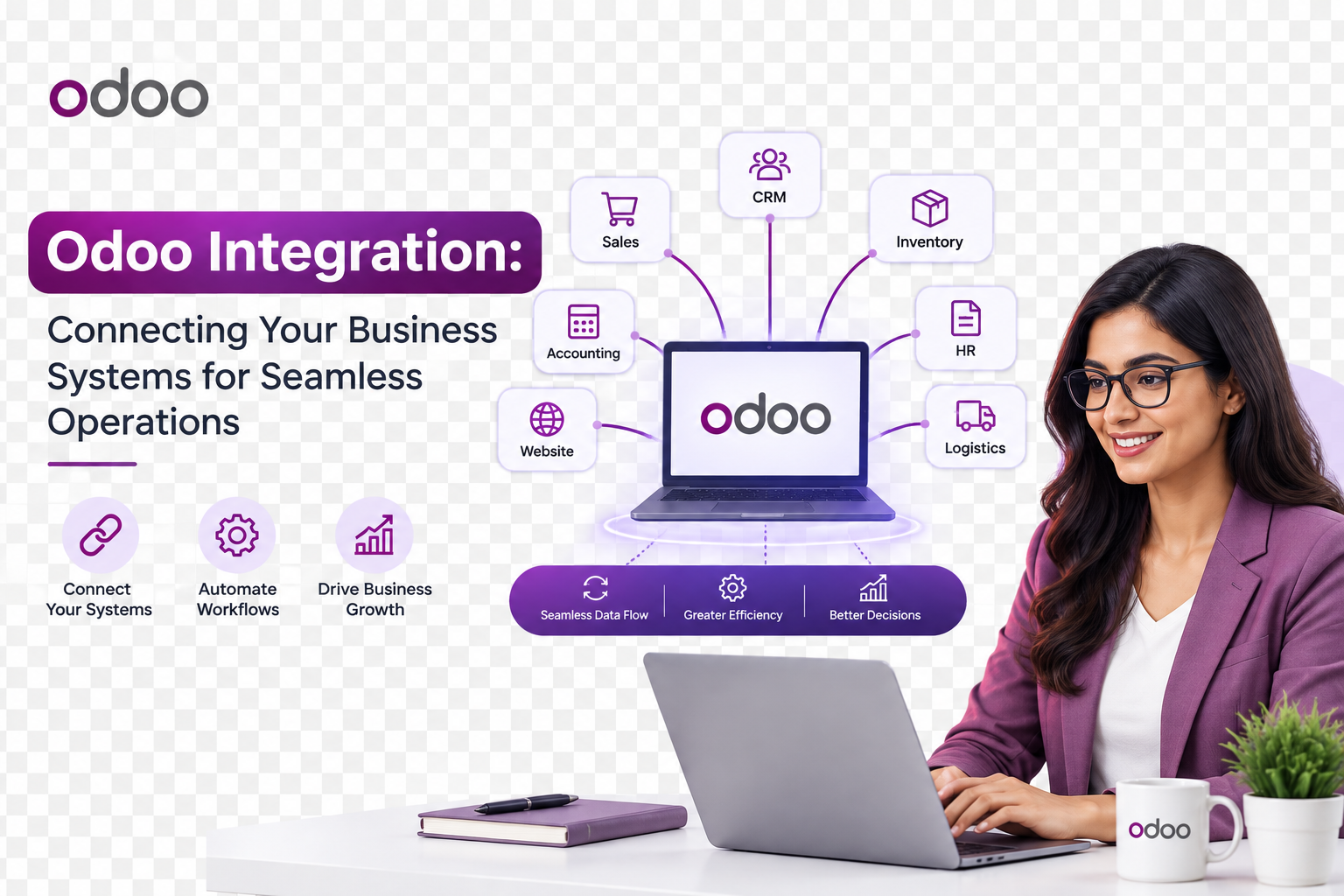
Modern businesses rely on multiple software applications to manage different areas of their operations. From e-commerce platforms and payment gateways to CRM systems, logistics services, accounting tools, and communication platforms, these systems need to work together efficiently.
Odoo Integration enables businesses to connect Odoo with external applications and services, allowing information to move between systems smoothly and reducing the need for repetitive manual data entry.
At Code-OX Technology, we help businesses integrate Odoo with the tools and platforms they already use, creating a connected and efficient business environment.
What is Odoo Integration?
Odoo integration is the process of connecting Odoo ERP with other software applications, platforms, services, or business systems. The goal is to allow relevant data to be exchanged between systems automatically and consistently.
Instead of maintaining separate databases and manually transferring information between applications, integration allows systems to communicate with each other and keep important business information synchronized.
Why is Odoo Integration Important?
Businesses often use different applications for different operational requirements. When these systems operate independently, employees may need to enter the same information multiple times, increasing workload and the possibility of errors.
Odoo integration helps create a more connected technology environment by allowing different platforms to communicate and exchange information.
Effective integration can help businesses:
- Reduce repetitive manual data entry.
- Improve data accuracy and consistency.
- Automate information exchange between systems.
- Save employee time and improve productivity.
- Improve visibility across business operations.
- Connect Odoo with existing business applications.
- Create more efficient end-to-end workflows.
Common Odoo Integration Solutions
1. E-commerce Integration
Businesses operating online stores can integrate their e-commerce platforms with Odoo to synchronize products, customers, orders, inventory, and other relevant information.
This can help connect online sales activities with inventory, sales, accounting, and fulfillment processes.
2. Payment Gateway Integration
Payment gateway integration can connect online payment transactions with Odoo, helping businesses manage payment-related information more efficiently.
Automated payment data exchange can reduce manual reconciliation and improve the visibility of transaction information.
3. CRM Integration
Odoo can be connected with external CRM and customer-related systems where required. This helps businesses synchronize customer information and improve coordination between sales and customer management activities.
4. Accounting and Finance Integration
Integration with financial platforms and services can help businesses streamline financial data exchange, invoicing, payment information, and accounting-related workflows.
5. Shipping and Logistics Integration
Businesses can connect Odoo with shipping and logistics services to improve order fulfillment and delivery workflows.
Relevant order and shipment information can be exchanged between systems, helping businesses maintain better visibility throughout the delivery process.
6. API Integration
APIs provide a way for different applications to communicate with each other. Odoo can be integrated with external systems through APIs to exchange data and trigger automated processes.
API-based integration can be useful when businesses need a customized connection between Odoo and an existing application.
7. Custom System Integration
Every business may have unique software requirements. When an existing application does not have a standard Odoo connector, a customized integration solution can be developed based on the required business workflow and data structure.
How Odoo Integration Works
A successful integration requires more than simply connecting two applications. The systems need to exchange the right information securely and consistently.
A typical Odoo integration process includes:
- Requirement Analysis: We understand the systems involved, business requirements, data, and workflows.
- Integration Planning: We define how the systems should communicate and what information needs to be exchanged.
- API and Data Mapping: Relevant fields and data structures are mapped between Odoo and the external system.
- Development: The required integration is developed and configured according to the planned workflow.
- Testing: Data synchronization, workflows, error handling, and system communication are thoroughly tested.
- Deployment: The integration is deployed after successful testing and validation.
- Monitoring and Support: Ongoing support helps ensure that the integration continues to operate reliably.
Benefits of Odoo Integration
Automated Data Synchronization
Integration can automatically transfer relevant information between connected systems, reducing the need for employees to manually enter the same data in multiple places.
Reduced Errors
Automating data exchange can reduce errors caused by repetitive manual data entry and inconsistent information.
Improved Productivity
Employees can spend less time transferring information between applications and more time focusing on important business activities.
Real-Time Business Visibility
Connected systems can provide businesses with better access to up-to-date operational information, supporting faster and more informed decision-making.
Better Customer Experience
When sales, inventory, customer, payment, and fulfillment information is connected, businesses can provide faster and more consistent customer service.
Scalable Technology Environment
As businesses grow, they may introduce new applications and services. A well-planned integration architecture makes it easier to connect additional systems when required.
Why Choose Code-OX Technology for Odoo Integration?
Code-OX Technology provides Odoo integration solutions designed around the specific requirements of each business. We focus on understanding existing systems, workflows, data structures, and business objectives before developing an integration solution.
Our team can help businesses connect Odoo with e-commerce platforms, payment systems, logistics services, third-party applications, APIs, and custom business software.
We focus on creating reliable integrations that simplify workflows, reduce manual effort, improve data visibility, and support long-term business growth.
When Should You Consider Odoo Integration?
Odoo integration can be valuable when your business:
- Uses multiple disconnected software applications.
- Frequently transfers data manually between systems.
- Experiences duplicate or inconsistent data.
- Needs to connect an e-commerce platform with ERP.
- Requires payment or logistics integration.
- Uses third-party applications alongside Odoo.
- Needs automated data synchronization.
- Wants to improve end-to-end business workflows.
Connect Your Business with Odoo
Odoo becomes even more powerful when it works together with the other systems your business depends on. By connecting applications and automating data exchange, businesses can reduce manual work, improve accuracy, and create more efficient operations.
Code-OX Technology helps businesses build connected Odoo environments that bring different platforms and processes together.
Looking to integrate Odoo with your existing systems? Contact Code-OX Technology to discuss your integration requirements and create a connected solution for your business.