.svg)
From Fleet to Fulfillment: Connecting the Modern Logistics Operation
تقرير من قبل
Code-Ox Technologies
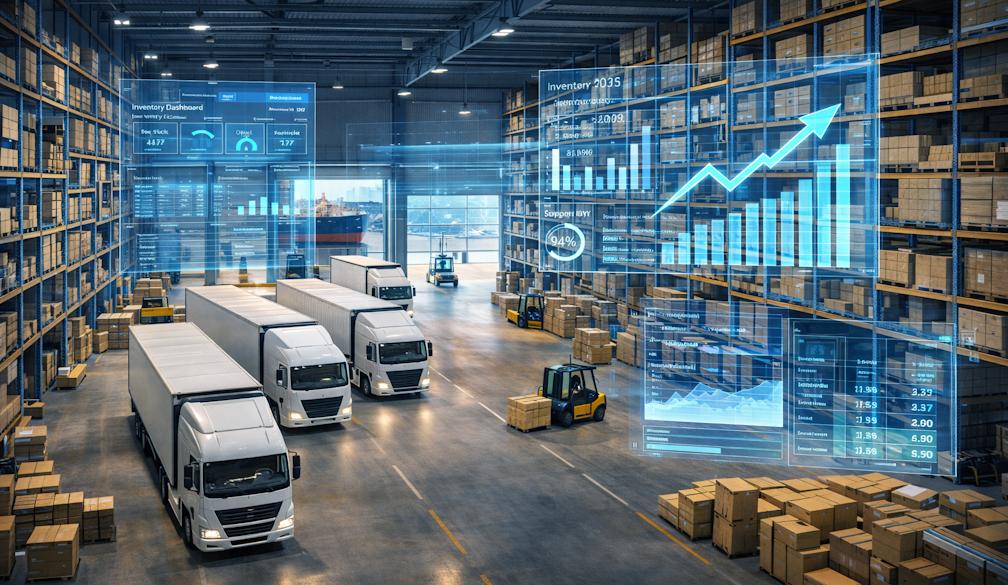
Code-Ox on the Move: Building Smarter, More Connected Logistics Operations
Logistics and transportation businesses operate in an environment where timing, coordination, visibility, and efficiency are critical. From managing fleets and drivers to moving goods through warehouses and coordinating deliveries, every stage of the logistics journey depends on accurate information and well-connected processes.
As logistics networks become more complex, businesses need more than isolated tools for fleet management, warehousing, shipment tracking, and delivery operations. They need a connected digital environment that allows information to move efficiently across the entire supply chain.
Code-Ox helps logistics and transport businesses build that connected environment by combining Odoo ERP with customized workflows, integrations, automation, analytics, and digital solutions designed around their operational requirements.
The Complexity Behind Modern Logistics
A logistics business has to coordinate multiple moving parts at the same time. Vehicles need to be available and maintained, drivers need to be managed, goods need to move through warehouses efficiently, shipments need to reach their destinations, and customers need visibility into their deliveries.
When these activities are managed across disconnected systems, teams can struggle to maintain a complete view of operations. A vehicle maintenance issue can affect delivery schedules, warehouse delays can impact fulfillment, and a lack of shipment visibility can create unnecessary customer inquiries.
Digital integration can bring these processes together and give logistics managers a clearer view of what is happening across their operations.
Fleet Management Beyond Vehicle Tracking
Fleet management is about much more than knowing where vehicles are. Businesses need to maintain vehicles, monitor fuel consumption, manage driver information, track leasing contracts, and ensure that vehicles remain available for operations.
Code-Ox can help logistics businesses configure and customize Odoo workflows around these requirements, creating a centralized environment for managing important fleet information.
Vehicle Maintenance Management
Regular maintenance plays an important role in keeping vehicles available and reducing unexpected operational interruptions.
Digital maintenance records can help businesses track service history, maintenance activities, and upcoming requirements. By centralizing this information, logistics teams can improve visibility into vehicle condition and plan maintenance more effectively.
Fuel and Driver Records
Fuel consumption and driver activity can contribute significantly to transportation costs. Maintaining accurate records allows businesses to better understand fleet performance and identify areas where efficiency can be improved.
Code-Ox can help integrate fleet-related records into broader business workflows, allowing management to access operational information alongside other business data.
Leasing and Fleet Lifecycle Management
Businesses operating leased vehicles need to keep track of contracts, vehicle information, and associated obligations.
Centralized fleet workflows can help ensure that leasing information remains accessible and connected to the relevant vehicles and operational records.
Making Warehouse Operations More Connected
Transportation and warehousing are closely connected. Goods need to move efficiently through receiving, storage, picking, packing, and shipping before reaching their destination.
Odoo can provide a foundation for connecting warehouse and logistics operations, while Code-Ox can customize workflows around the specific movement of goods within an organization.
Multi-Warehouse Routing
Businesses operating across multiple warehouses need visibility into inventory locations and the movement of products between facilities.
Connected warehouse workflows can help logistics teams coordinate stock movements and improve the flow of goods across different locations.
Cross-Docking Operations
Cross-docking can help businesses reduce unnecessary storage by moving incoming goods directly toward outbound shipments when appropriate.
Digital workflows can help coordinate these movements and provide better visibility into goods moving between receiving and dispatch operations.
Pick, Pack and Ship
Order fulfillment requires accurate coordination between warehouse teams and transportation operations. Picking the correct products, packing them properly, and preparing them for shipment are essential steps in the fulfillment process.
Code-Ox can help businesses connect pick-pack-ship workflows with inventory, sales, and delivery processes, reducing information gaps and improving fulfillment accuracy.
Connecting Logistics with Delivery Carriers
Modern logistics businesses often work with multiple local and international delivery carriers. Managing shipment labels, tracking information, and carrier updates manually can create unnecessary administrative work.
Code-Ox provides integration capabilities that can connect Odoo with external systems and carrier platforms, helping automate the exchange of shipment information.
Automated Shipping Labels
Integrating carrier services with business workflows can help automate the generation of shipping labels and reduce repetitive data entry.
This can make the shipping process more consistent while allowing logistics teams to spend less time switching between systems.
Shipment Tracking
Customers increasingly expect visibility into the status of their shipments. Real-time tracking can improve transparency and reduce uncertainty throughout the delivery process.
By connecting carrier information with business systems, Code-Ox can help logistics companies provide better shipment visibility to internal teams and customers.
How Code-Ox Advances Logistics and Transport
Every logistics operation has its own fleet structure, warehouse network, delivery model, carrier relationships, and business processes. A standard system may provide a foundation, but customization is often required to reflect how a specific organization operates.
Code-Ox combines Odoo implementation and customization with integrations, automation, analytics, and digital development to create solutions around those operational requirements.
Customized Odoo Logistics Workflows
Code-Ox provides Odoo implementation and customization services that can adapt modules, workflows, reports, and business logic to logistics and transportation operations.
This allows businesses to connect fleet, inventory, warehouse, sales, purchasing, and other operational processes within a unified ERP environment.
Carrier and Third-Party Integrations
Logistics companies rarely operate with a single system. They may depend on carrier platforms, payment systems, customer portals, warehouse technologies, and other external applications.
Code-Ox develops API and integration solutions that help connect these systems, creating a more seamless flow of information across the logistics ecosystem.
Automation Across Logistics Operations
Many logistics processes involve repetitive activities such as shipment updates, notifications, document generation, inventory movements, and operational reporting.
Code-Ox's AI and automation capabilities can help identify suitable processes for automation, reducing repetitive manual work and helping teams respond more quickly to operational events.
Dashboards for Logistics Intelligence
Logistics managers need timely information to make decisions about fleet availability, inventory movement, shipment performance, fulfillment, and operational costs.
Code-Ox develops dashboards and analytics solutions that transform operational data into clear business insights. Real-time reporting can help management identify bottlenecks, monitor key performance indicators, and respond to changing conditions.
Reducing Logistics Costs Through Better Visibility
Logistics efficiency is closely connected to visibility. Businesses need to understand how vehicles are being utilized, how inventory is moving, where fulfillment delays occur, and how delivery operations are performing.
When this information is available within a connected system, organizations can identify opportunities to optimize routes, inventory movements, fleet utilization, and fulfillment processes.
Code-Ox helps businesses turn operational information into actionable insights through Odoo customization, analytics, integrations, and automation.
Building a Connected Logistics Ecosystem
The future of logistics is not simply about tracking vehicles or shipments. It is about connecting the entire journey of goods and information.
From warehouse operations and inventory movement to fleet management, carrier integration, delivery tracking, and customer communication, each process can contribute to a more efficient logistics ecosystem.
Code-Ox combines Odoo with custom development, integrations, automation, analytics, web applications, and mobile solutions to help businesses create this connected environment.
Why Logistics Businesses Choose Code-Ox
Code-Ox brings together ERP expertise and broader digital technology capabilities to help logistics and transportation companies address complex operational requirements.
- Odoo ERP implementation and customization
- Fleet management workflows
- Vehicle maintenance and fuel tracking
- Driver and leasing record management
- Multi-warehouse logistics workflows
- Cross-docking and fulfillment processes
- Pick-pack-ship operations
- Local and international carrier integrations
- Automated shipping labels and tracking
- Real-time dashboards and logistics analytics
- AI and process automation
- API and third-party system integrations
- Custom web and mobile application development
- Odoo migration, training, and support
The Road Ahead for Logistics
As supply chains become more connected, logistics businesses need technology that can keep up with the speed and complexity of their operations.
The objective is not simply to digitize individual activities. It is to connect fleet management, warehouses, inventory, carriers, deliveries, and customer-facing processes so that information can move seamlessly across the organization.
With Odoo and Code-Ox's broader digital capabilities, logistics businesses can create a stronger technological foundation for efficiency, visibility, and scalable growth.
Conclusion
Logistics and transportation depend on coordination. Vehicles, drivers, warehouses, inventory, carriers, and customers all form part of the same operational chain.
Code-Ox helps logistics businesses turn this complexity into connected and manageable digital workflows.
From fleet maintenance and warehouse routing to carrier integrations, shipment tracking, fulfillment, automation, and analytics, a customized Odoo environment can provide businesses with greater visibility across their logistics operations.
For organizations looking to make transportation and logistics more connected, efficient, and data-driven, Code-Ox provides the technology expertise to move operations forward.