.svg)
Frontend vs Backend vs Full-Stack Development: What’s the Difference?
Introduction
Modern websites and applications are built from multiple layers that work together. While users interact with the visible part of an application, there is also a powerful system running behind the scenes.
This is where Frontend, Backend, and Full-Stack Development come in.
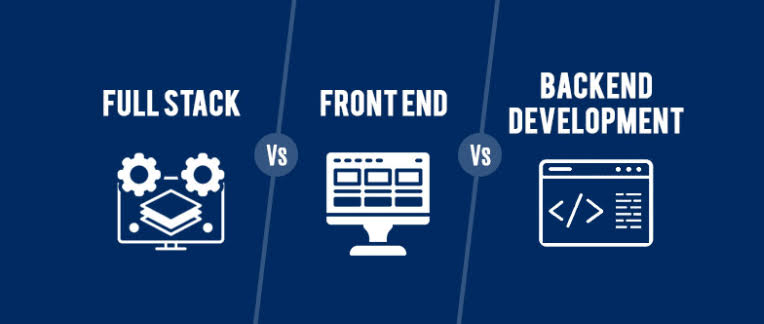
Frontend developers build what users see and interact with. Backend developers build the server-side systems that power the application. Full-stack developers work across both frontend and backend.
Understanding these differences can help businesses choose the right development approach and help beginners decide which area of software development to learn.
What Is Frontend Development?
Frontend development focuses on the user interface and user experience of a website or application.
Everything you can see and interact with — such as buttons, menus, forms, animations, product pages, dashboards, and layouts — is generally part of the frontend.
Common Frontend Technologies
- HTML — structures web pages
- CSS — controls styling and layouts
- JavaScript — adds interaction and dynamic behavior
- React — builds component-based user interfaces
- Next.js — supports modern React applications and full-stack web development
- Vue.js — another popular frontend framework
What Does a Frontend Developer Do?
A frontend developer may work on:
- Website layouts
- Responsive design
- Navigation menus
- Forms and validation
- Interactive components
- Animations
- API integration
- Performance optimization
- Accessibility
- Mobile and desktop compatibility
For example, when you click “Add to Cart” on an e-commerce website, the button, product interface, cart display, and user interaction are frontend responsibilities.
What Is Backend Development?
Backend development focuses on the server-side logic and infrastructure that users normally do not see.
The backend processes requests, communicates with databases, manages authentication, handles business logic, and sends information to the frontend.
Common Backend Technologies
- Node.js
- Python
- Java
- PHP
- C#
- Go
- Express.js
- Django
- Laravel
- Spring Boot
Backend developers also commonly work with databases such as:
- PostgreSQL
- MySQL
- MongoDB
- Microsoft SQL Server
- Redis
What Does a Backend Developer Do?
Backend development can include:
- Creating APIs
- Database design
- Authentication and authorization
- Business logic
- Payment processing
- Data validation
- Server configuration
- Security
- Application performance
- Third-party integrations
For example, when a customer places an order, the backend may validate the order, calculate the total, save the transaction in the database, process payment information, and return the order status to the frontend.
What Is Full-Stack Development?
Full-stack development combines frontend and backend development.
A full-stack developer can work on the user interface as well as the server-side systems behind it.
A typical full-stack application may contain:
Frontend → API → Backend → Database
A full-stack developer may therefore work with technologies such as React or Next.js on the frontend and Node.js, Python, Java, or another backend technology on the server.
Frontend vs Backend vs Full-Stack
| Area | Frontend | Backend | Full-Stack |
|---|---|---|---|
| Main Focus | User interface | Server-side systems | Frontend + Backend |
| Visible to Users | Yes | Mostly no | Both |
| Common Technologies | HTML, CSS, JavaScript, React | Node.js, Python, Java, PHP | Combination of frontend and backend technologies |
| Databases | Usually consumes database data through APIs | Designs and manages databases | Can work with both APIs and databases |
| APIs | Consumes APIs | Builds APIs | Builds and consumes APIs |
| Typical Responsibility | Experience and interface | Logic and data | End-to-end application development |
A Simple Real-World Example
Imagine an online shopping website.
Frontend
The frontend displays:
- Product images
- Product names
- Prices
- Search
- Shopping cart
- Checkout page
- Buttons and menus
Backend
The backend handles:
- Product information
- Customer accounts
- Orders
- Inventory
- Payments
- Authentication
- Business rules
Database
The database stores information such as:
- Customers
- Products
- Orders
- Payments
- Inventory
Full-Stack
A full-stack developer can work across these different layers and connect them into one complete application.
Which One Should You Choose?
The right choice depends on your goals.
Choose Frontend Development If:
You enjoy:
- Designing interfaces
- Creating visual experiences
- Working with animations
- Improving user experience
- Seeing immediate results in the browser
Frontend development can be a good starting point for people who enjoy both technology and design.
Choose Backend Development If:
You enjoy:
- Logic and problem solving
- Databases
- APIs
- Security
- System architecture
- Data processing
Backend development is particularly important for applications with complex business logic and large amounts of data.
Choose Full-Stack Development If:
You want to understand and build complete applications.
Full-stack development gives developers the ability to work across multiple layers, from the user interface to APIs, server-side logic, and databases.
However, being full-stack does not necessarily mean being an expert in every technology. Developers often specialize in certain technologies while maintaining working knowledge of the broader application stack.
Which Is Best for a Business?
There is no universal winner.
Frontend developers are valuable when the primary challenge is creating a high-quality user experience.
Backend developers are important when the application requires complex APIs, databases, integrations, security, or business logic.
Full-stack developers can be useful when a smaller team needs developers who can handle multiple parts of the application.
For larger projects, having specialized frontend and backend developers can provide deeper expertise and better separation of responsibilities.
How Frontend and Backend Work Together
Frontend and backend development are not competing approaches. They are two connected parts of modern application development.
A typical request works like this:
User → Frontend → API → Backend → Database
The backend processes the request and sends the required information back:
Database → Backend → API → Frontend → User
This communication allows users to interact with data and functionality without directly accessing the underlying database or server.
Frontend, Backend, or Full-Stack in 2026?
Modern development increasingly involves frameworks and platforms that blur the traditional boundaries between frontend and backend.
Frameworks such as Next.js support frontend experiences alongside server-side functionality, while cloud platforms, managed databases, serverless services, APIs, and AI-powered development tools are changing how applications are built.
As a result, developers increasingly benefit from understanding the complete application architecture even when they specialize in one area.
Final Thoughts
Frontend, backend, and full-stack development each play an important role in modern software development.
- Frontend focuses on what users see and interact with.
- Backend handles servers, APIs, databases, and business logic.
- Full-stack combines both areas to build complete applications.
For beginners, starting with frontend or backend fundamentals can provide a strong foundation. For businesses, the best development team depends on the project's complexity, budget, timeline, and technical requirements.
The most important factor is not simply choosing frontend, backend, or full-stack development — it is choosing the right architecture and expertise for the application you want to build.