.svg)
The Empty Chair Problem: Turning Salon Appointments into a Smarter Daily Operation
Reported By
code
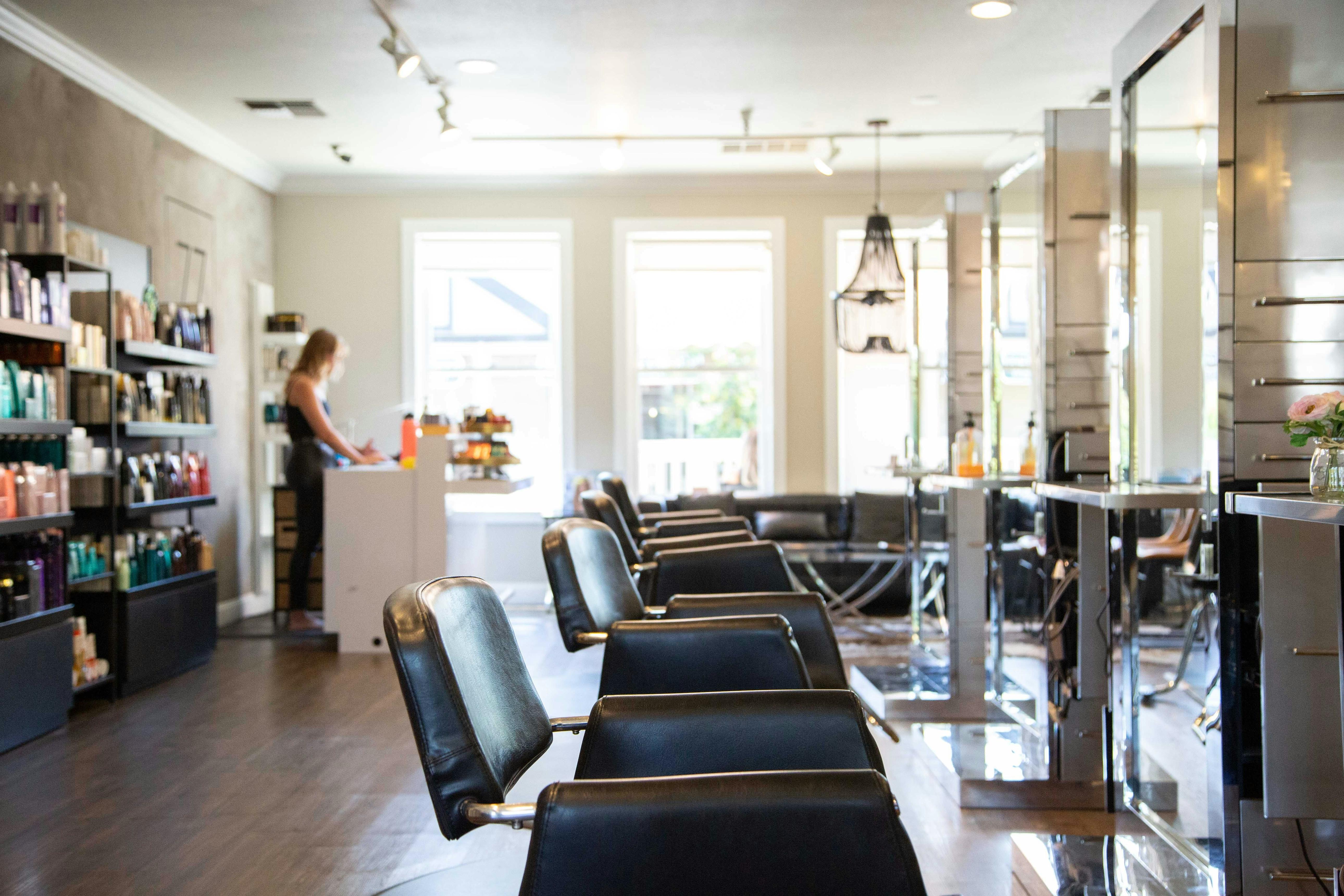
The Empty Chair Problem: Turning Salon Appointments into a Smarter Daily Operation
A salon can look busy and still have unused capacity.
Consider a salon with eight stylists and a full appointment book. Three clients cancel during the day. One stylist has a 90-minute gap between appointments. Another spends part of the afternoon handling bookings instead of serving clients. Meanwhile, a customer arrives looking for a particular hair-care product, only to discover that it is out of stock.
None of these problems necessarily appears as a major operational failure.
But together, they affect revenue, staff utilization, customer experience, and inventory performance.
For modern salons, the challenge is therefore larger than booking appointments. The business needs to coordinate clients, services, stylist availability, appointments, commissions, products, payments, and customer relationships.
Code-Ox's beauty-salon solution is designed around these operational connections, with appointment scheduling, stylist assignment and commission tracking, salon retail and POS, inventory management, customer profiles, rewards, and automated notifications.
An Appointment Book Is Not the Same as a Capacity Plan
Imagine a salon with ten stylists and 60 appointments scheduled for Saturday.
At first glance, the schedule looks healthy.
But appointments are not interchangeable.
A haircut may take 30 minutes. A color treatment may require two hours. A bridal appointment may require a particular stylist. A specialist treatment may only be available during certain hours.
Simply counting appointments does not tell the salon whether its available staff capacity matches customer demand.
Match the Service to the Person and the Time
A useful appointment system needs to understand more than the customer's preferred date.
It should be able to consider the requested service, the stylist's availability, and the duration of the appointment.
For example, if a client requests a specialist color treatment, the booking process should identify stylists who are actually available and suitable for that service rather than presenting every employee as an equivalent option.
Code-Ox's salon solution includes an interactive appointment calendar that supports booking according to service, stylist availability, or client request.
The Most Expensive Appointment Can Be the One That Never Happens
Suppose a stylist has a two-hour treatment booked for 2:00 PM.
The client forgets the appointment and never arrives.
The salon has now lost a two-hour revenue opportunity that cannot easily be recovered at 4:00 PM.
This is different from a product that can be sold tomorrow. A stylist's unused time disappears when the appointment window passes.
Use the Time Before the Appointment
Automated reminders can reduce the amount of responsibility placed on clients to remember appointments themselves.
A notification before the scheduled visit gives the customer an opportunity to confirm, reschedule, or recognize that an appointment is approaching.
The Code-Ox beauty-salon page specifically identifies automated notifications as a way to reduce appointment no-shows.
The important mechanism is simple: the system communicates with the customer before the appointment becomes a missed appointment.
A Cancellation Can Become an Opportunity Instead of an Empty Slot
Now consider a client cancelling a 90-minute appointment that was scheduled for a stylist at 3:00 PM.
If the cancellation is simply recorded, the salon has an empty block.
If the booking system exposes that availability quickly, the salon has an opportunity.
A waiting customer may be able to take the newly available slot. Another appointment may be moved forward. The stylist may be assigned another service.
Availability Has a Shelf Life
A free appointment at 10:00 AM is useful.
A free appointment discovered at 9:55 AM may be much less useful.
That is why real-time scheduling matters in appointment-driven businesses. Availability needs to be visible while it can still be sold.
Code-Ox can help structure salon booking workflows around stylist availability and service requirements rather than maintaining appointments as disconnected calendar entries.
Stylists Are Not Just Employees on a Payroll
In many salons, individual stylists contribute directly to revenue.
One stylist may specialize in coloring, another in styling, and another in beauty treatments. Their compensation may also include commissions based on the services they deliver.
That creates another operational relationship:
Service performed → Revenue generated → Commission calculated
Commission Should Follow the Service
Suppose a stylist performs 18 services during a week, with different commission rates applying to different service categories.
If the commission calculation is performed manually at the end of the month, management has to reconcile appointments, services, payments, and employee records.
A connected system can associate the completed service with the responsible stylist and use the defined commission rules to support the calculation.
Code-Ox's beauty-salon solution specifically includes automated salary and commission calculations based on services delivered.
The Same Customer May Be Buying More Than a Service
A salon visit does not necessarily end when the treatment is complete.
A customer who receives a hair treatment may also purchase shampoo, conditioner, styling products, or other beauty products before leaving.
That creates two different transactions within the same customer relationship:
- A service delivered by a stylist
- A retail product sale
If the salon manages these through separate processes, customer history and inventory information can become fragmented.
Connect Services and Retail at the Point of Sale
A salon POS can handle product sales and payments while maintaining the connection to inventory.
That means the sale of a bottle of professional shampoo is not merely recorded as revenue. The corresponding inventory quantity can also be updated.
Code-Ox's salon offering includes retail POS functionality for beauty products, inventory management, and payments.
The Product on the Shelf Is Part of the Customer Experience
Imagine a customer asking for the exact product their stylist recommended.
The salon's website says it is available. The staff member checks the shelf and finds none.
Now the problem is not only an inventory problem.
The salon has missed a retail opportunity and potentially weakened the customer's confidence in its recommendation.
Inventory Needs to Reflect What Is Actually Available
A connected product inventory system gives staff a clearer view of quantities rather than relying entirely on physical shelf checks or manually maintained lists.
It can also support purchasing decisions when stock falls below the level the business wants to maintain.
For salons carrying a large range of cosmetics and professional products, this becomes increasingly important.
Code-Ox specifically highlights automatic management of salon cosmetics inventory as one of the business benefits of its solution.
A Popular Treatment Can Create a Hidden Inventory Problem
Suppose one stylist's keratin treatment becomes extremely popular.
Appointments increase from five per week to fifteen.
The salon sees the additional service revenue, but the increased demand also means greater consumption of the products required for the treatment.
If purchasing decisions are based only on historical product sales, the salon may not immediately account for the relationship between the service schedule and product consumption.
Service Demand Can Inform Inventory Decisions
When services and products are represented in the same operational environment, management can begin looking at the relationship between appointments and product requirements.
That gives the salon a better basis for preparing inventory around upcoming demand.
The goal is not to keep every product overstocked.
It is to make purchasing decisions with a clearer understanding of what the business expects to deliver.
Customer Profiles Are More Useful Than a Name and Phone Number
A customer who has visited a salon ten times has created a useful history.
That history may include previous services, purchases, appointment patterns, and loyalty activity.
But if the salon's customer record contains only a name and phone number, most of that relationship knowledge remains outside the system.
Build a History Around the Customer
A structured customer profile can help staff understand the relationship before the next appointment.
For example, the team may be able to see previous services and purchases and use that information to provide a more informed experience.
This is especially useful when a customer books with a different stylist or visits another branch.
Code-Ox's salon solution includes customer profiles and personalized rewards as part of the customer-management workflow.
Loyalty Should Encourage the Next Visit
A loyalty program is often treated as a marketing feature.
For a salon, it can also become part of the customer-retention workflow.
Imagine a customer who regularly books a treatment but has not visited for several months.
A loyalty system can give the salon a structured way to recognize the customer's history and offer an appropriate reward or incentive according to its program rules.
Rewards Become More Relevant When They Use Customer History
A generic discount sent to every customer is very different from a reward associated with an individual's relationship with the salon.
When customer profiles and transaction history are connected, loyalty programs can be designed around actual customer activity.
Code-Ox's sector offering specifically mentions personalized rewards through customer profiles.
The Reception Desk Should Not Become the Bottleneck
During a busy afternoon, the receptionist may be handling several tasks simultaneously:
- Checking in a client
- Answering a phone call
- Booking a future appointment
- Moving an existing appointment
- Processing a payment
- Checking product availability
- Answering a stylist's question
If every operation requires searching through separate systems, the reception desk becomes the place where all operational complexity accumulates.
Put the Relevant Information Where the Transaction Happens
The booking calendar, customer record, service information, stylist availability, POS, and product inventory should work together as much as practical.
Then the receptionist does not need to switch between disconnected sources to answer basic operational questions.
This is the broader principle behind Code-Ox's approach: connecting business processes so teams spend less time moving information manually between systems. The company's wider services include Odoo implementation and customization, integrations, dashboards and analytics, AI and automation, and custom web and mobile applications.
Multiple Stylists Create a Scheduling Puzzle
Consider a salon with twelve stylists and different service durations.
One client wants a haircut at 2:00 PM. Another wants a color treatment. A third wants a service that can only be performed by a particular stylist.
The schedule is no longer a simple list of appointments.
It is a resource-allocation problem.
Match Demand to Available Skill
An effective salon booking system needs to account for who is available and what services they can provide.
This prevents the calendar from treating every employee as interchangeable when the salon's actual operation does not work that way.
The result is a schedule that reflects the resources the business actually has.
What a Connected Salon Appointment Looks Like
Consider a customer booking a color treatment online.
- Service selected: The customer chooses the required treatment.
- Availability checked: The system considers appropriate stylist availability.
- Appointment created: The booking is placed into the salon calendar.
- Reminder sent: The customer receives an automated notification before the appointment.
- Client arrives: Staff access the customer record and appointment details.
- Service completed: The service is recorded against the appointment and stylist.
- Commission calculated: The completed service contributes to the applicable stylist commission workflow.
- Retail sale added: Any products purchased are processed through the POS.
- Inventory updated: Product stock reflects the completed sale.
- Customer history updated: The transaction becomes part of the customer's ongoing record.
One appointment has now contributed information to scheduling, staff compensation, sales, inventory, and customer management.
That is the difference between recording an appointment and managing the appointment as part of the business operation.
What Happens When the Salon Has Multiple Locations?
A growing salon group may eventually operate several branches.
A customer might visit one location for a treatment and another location for a different service.
Management may also need to compare stylist utilization, product sales, appointments, and inventory across locations.
The challenge is balancing local scheduling with group-level visibility.
Keep Each Branch Operationally Flexible
Each salon location can maintain its own appointment schedules, staff availability, and inventory while the broader system provides management with a consolidated view where required.
This creates a foundation for comparing performance without forcing every location to operate identically.
Code-Ox can customize the Odoo environment around the salon group's structure, including branch-specific workflows, permissions, reporting, and integrations.
The Salon Manager Needs to See More Than Revenue
Daily sales are important, but revenue alone does not explain salon performance.
A manager may also need to know:
- How many appointments were completed?
- How many were cancelled or missed?
- Which stylists had the highest utilization?
- Which services generated the most demand?
- Which products are selling?
- Which products are approaching low stock?
- How much commission has been generated?
- Which customers are returning?
These questions require information from several parts of the business.
Turn Daily Activity into Management Information
Code-Ox provides dashboards, analytics, KPI reporting, and data visualization as part of its wider technology services.
For a salon, those capabilities can be used to build management views around the metrics that actually influence capacity, revenue, staffing, inventory, and customer retention.
The important point is not the number of charts.
It is whether the dashboard helps the manager make a decision.
From Booking Calendar to Business System
A booking application solves one problem: scheduling.
A salon operation has many more.
The appointment affects stylist availability.
The completed service affects commission.
The service may consume products.
The customer may buy additional products.
The sale affects inventory.
The transaction contributes to customer history.
The customer may earn a reward.
Each of these relationships already exists in the real world.
The technology simply needs to represent them in a connected way.
Where Code-Ox Fits into Salon Technology
Odoo provides a broad business foundation that can cover sales, inventory, accounting, employees, customer management, and other operational functions.
But a beauty salon has its own workflow logic.
Appointments revolve around services and stylist availability. Compensation may depend on services completed. Retail sales need to coexist with appointments. Customer retention depends on the relationship built over multiple visits.
Code-Ox can help adapt Odoo around these salon-specific requirements through implementation, customization, integrations, automation, reporting, and supporting web or mobile applications.
The company currently describes its Odoo services as including implementation, customization, integration, migration, training, and consultancy, alongside broader software capabilities such as web applications, mobile applications, dashboards, analytics, AI, and automation.
That means a salon can start with its operational requirements rather than trying to force its business into a generic software workflow.
The Real Cost of an Empty Chair
An unused appointment slot is easy to overlook.
There is no damaged product, no failed transaction, and no obvious accounting error.
There is simply a period of time when a revenue-producing resource was available but unused.
Multiply that across several stylists, several days, and several months, and the operational impact becomes much more significant.
That is why salon management should look beyond the number of appointments booked.
The better questions are:
- How much of our available stylist capacity is being used?
- How many appointments are lost to no-shows?
- How quickly can cancelled slots be filled?
- Which services generate the most demand?
- Which stylists are most heavily booked?
- Which products should we reorder?
- Which customers are returning?
These are the questions that turn scheduling data into operational intelligence.
Build a Salon Operation Around the Customer Journey
The best salon technology does not begin with a software feature.
It begins with the customer's journey.
Discover → Book → Confirm → Visit → Receive Service → Pay → Purchase Products → Earn Rewards → Return
Behind that journey are the salon's own processes:
Schedule → Assign → Deliver → Track Commission → Update Inventory → Record Customer History → Analyze Performance
When those two journeys are connected, the salon can manage the customer experience and the business operation from the same underlying information.
Make Every Appointment Work Harder for the Business
Technology cannot make every client arrive on time or guarantee that every stylist will be fully booked.
It can, however, make the information surrounding those activities more visible and actionable.
A booking can be matched to the right stylist. A reminder can be sent before the appointment. A completed service can feed commission calculations. A product sale can update inventory. A customer transaction can contribute to loyalty.
That is where an integrated salon system becomes valuable.
Instead of treating each activity as a separate administrative task, the business can connect them into one operational chain.
Code-Ox can help build that chain with an Odoo-based salon solution tailored to your services, staff, appointments, retail products, commissions, and customer relationships.
Talk to Code-Ox about turning your salon's booking, POS, inventory, staff, and customer operations into one connected system.