.svg)
Where Did the Project Budget Go? Bringing Construction Costs, Materials, and Site Work Under Control
تقرير من قبل
Cod
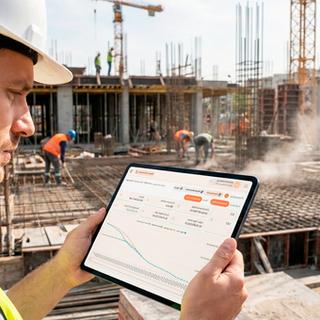
Where Did the Project Budget Go? Bringing Construction Costs, Materials, and Site Work Under Control
A construction project rarely loses money because someone suddenly spends a huge amount of money without authorization.
Cost overruns are usually more gradual.
A few extra material purchases here. Additional equipment hours there. A subcontractor invoice that arrives higher than expected. Labour hours that were not captured against the right project activity. A change in scope that reaches the site team before it reaches the cost-control process.
Individually, these events may look manageable.
Across a six-month construction project, they can change the financial outcome considerably.
This is why construction management is not only about completing work on site. It is about continuously connecting project planning, budgets, materials, labour, equipment, subcontractors, purchasing, and actual expenses.
Code-Ox's construction solution is built around this project-based model, with Odoo workflows for project planning, Gantt scheduling, cost control, subcontractor management, material tracking, field-office coordination, and equipment management.
The Budget Looks Fine Until the Site Starts Moving
Imagine a project that begins with an approved construction budget.
The management team knows the expected material cost. Labour has been estimated. Equipment requirements have been planned. Subcontractor costs have been considered.
Then construction begins.
The site starts consuming materials. Workers log hours. Purchase orders are raised. Equipment moves between activities. Subcontractors submit progress claims.
The original budget does not change automatically just because reality does.
Planned Cost and Actual Cost Need to Meet in the Same System
A construction ERP should allow project teams to compare what they expected to spend with what they are actually spending.
For example, a project manager might see:
- Planned concrete cost
- Purchased concrete
- Material consumed on site
- Remaining requirement
- Actual expenditure
That comparison is far more useful than discovering the final cost after the project is complete.
Code-Ox specifically identifies real-time comparison between planned budgets and actual project expenses as a construction capability.
A Construction Site Does Not Wait for the Accounting Department
Work happens on site first.
The financial impact appears afterward.
A project manager may approve additional material because the crew needs it immediately. A subcontractor may complete another stage of work before the office receives the supporting documentation.
If information only moves between teams at the end of each day or week, management is looking at yesterday's project.
Site Activity Needs to Reach the Office While It Still Matters
Construction operations benefit when field activity can feed the central project record instead of remaining in notebooks, messages, spreadsheets, or disconnected applications.
That means the office can work with current project information while the site team continues working.
Code-Ox highlights improved communication between field workers and office teams as one of the benefits of its construction ERP approach.
The important part is not simply “better communication.”
The mechanism is having project information stored against the same operational records that the office uses for planning, purchasing, costing, and reporting.
One Material Request Can Affect Several Parts of the Project
Consider a site team that discovers it needs another 200 units of a construction material.
The request might trigger several questions:
- Is the material already available in inventory?
- Was it included in the original project budget?
- Is the required quantity within the planned consumption?
- Does it need to be purchased?
- Which supplier should provide it?
- When is it needed on site?
- Which project or task should receive the cost?
These are not separate business questions.
They are different stages of the same material requirement.
Connect the Requirement to the Cost
A connected Odoo workflow can associate purchasing and inventory activity with the relevant project structure.
This creates a traceable path from the site requirement to procurement and ultimately to project cost.
Instead of simply knowing that “a purchase was made,” management can ask why it was made, which project needed it, and how it affects the project's financial position.
Materials Do Not Only Cost Money When They Are Purchased
Buying material is only one part of material management.
The more important question during construction is often:
How much material is actually being consumed?
Suppose a project has a planned requirement for a particular material.
If the site consistently consumes more than expected, the problem may not be procurement.
It could indicate inaccurate estimation, waste, design changes, damage, incorrect installation, or another operational issue.
Consumption Can Reveal Problems Before the Final Invoice
Tracking material movement against the project gives managers another way to monitor performance.
If actual consumption begins moving significantly away from the planned quantity, the project team has an opportunity to investigate before the variance becomes a major cost problem.
Code-Ox identifies real-time visibility into material consumption rates as a business benefit for construction companies.
The Cheapest Material Is Not Always the Cheapest Project Decision
A purchasing team may find a lower-cost supplier.
That sounds positive.
But if the supplier's lead time delays a critical construction activity by several days, the saving on material may be insignificant compared with the cost of the delay.
Construction procurement therefore cannot be treated as a simple “buy at the lowest price” exercise.
Procurement Has to Understand the Project Schedule
Materials have to arrive when the project needs them.
That means procurement decisions should be connected to project activities and expected timelines.
A project schedule can show when a material-dependent task is planned. Procurement can then work backward from that requirement to determine when purchasing needs to happen.
This is where project planning and procurement stop being separate departments and become one operational workflow.
A Gantt Chart Is More Useful When It Knows What the Project Needs
A construction Gantt chart can show when tasks are expected to begin and end.
But a schedule becomes more useful when the activities behind those dates are connected to resources, equipment, materials, and responsible teams.
Schedule the Work, Not Just the Dates
Imagine three activities are planned to run during the same week.
One requires a crane.
Another requires a specialist subcontractor.
The third depends on a specific material arriving beforehand.
The dates may look perfectly reasonable on a basic timeline.
Operationally, however, the three activities compete for different resources and dependencies.
Project planning needs to reflect those relationships.
Code-Ox's construction offering includes project planning and Gantt charts for scheduling tasks, allocating equipment, and tracking milestones through visual timelines.
The Real Construction Schedule Is Full of Dependencies
Concrete work may need to happen before another stage can begin.
A subcontractor may need the site prepared before arriving.
A material delivery may need to occur before installation.
Equipment may need to be available during a specific window.
When one activity moves, several others can move with it.
Schedule Changes Should Be Visible
If a critical task is delayed, the project manager needs to understand what else is affected.
A connected project structure makes those relationships easier to track because tasks, resources, milestones, and project information exist within the same operational environment.
This is more useful than maintaining one schedule for the project manager and separate spreadsheets for equipment, procurement, and subcontractors.
Subcontractors Are Part of the Project Cost, Not an External Detail
Construction projects frequently depend on specialist subcontractors.
Electrical work, plumbing, structural work, HVAC, finishing, flooring, fabrication, and other activities may involve external teams.
The project manager needs to know what has been contracted, what has been completed, what remains outstanding, and what has been billed.
Progress Payments Need Context
A subcontractor invoice should not exist in isolation.
Management may need to connect the payment to:
- The subcontractor contract
- The relevant project
- The agreed scope
- Completed work
- Progress percentage
- Previous payments
- Remaining contract value
Code-Ox's construction solution includes subcontractor contract management, performance evaluation, and progress-payment tracking.
This gives the project team a clearer commercial view of subcontracted work rather than treating every invoice as an independent transaction.
The Subcontractor May Be on Site Before the Invoice Exists
This is an important construction-specific problem.
Work can be completed today while the financial documentation arrives days later.
If the project team only looks at invoices, the reported cost can lag behind the actual work being performed.
Track Progress Before the Final Bill Arrives
Recording subcontractor progress against the project provides a better indication of the project's developing cost position.
It also creates a basis for comparing completed work against contractual expectations before approving the corresponding payment.
This is one reason construction ERP needs project and accounting workflows to work together rather than operating as completely separate systems.
Equipment Can Become an Invisible Project Cost
Consider a piece of heavy equipment that is scheduled for a project.
The machine may be rented or owned.
Either way, its utilization affects the economics of the project.
If equipment sits unused for several days, the project may still be paying for it.
If preventive maintenance is missed, an unexpected breakdown can interrupt the schedule.
Know When Equipment Is Being Used and When It Is Not
Equipment management should therefore connect utilization with project planning.
Managers can use the information to understand where equipment is assigned, how it is being utilized, and when maintenance is due.
Code-Ox identifies equipment utilization and preventive-maintenance scheduling as part of its construction-sector solution.
This turns equipment from an asset that is merely listed in the system into a resource that can be actively managed.
A Breakdown Is More Expensive When It Stops Three Other Activities
Imagine a machine scheduled for a critical construction activity.
The equipment fails unexpectedly.
The immediate problem is the machine.
The secondary problems may include idle workers, delayed subcontractors, postponed material deliveries, and changes to the project schedule.
The cost of the breakdown therefore extends beyond the repair bill.
Preventive Maintenance Protects the Schedule
Maintenance planning can help teams identify service requirements before equipment reaches an unexpected failure point.
When maintenance schedules are connected with equipment records and project assignments, the team can plan around service windows rather than discovering maintenance needs during critical work.
Labour Hours Need to Belong Somewhere
A worker may spend eight hours on site.
That information is not particularly useful for project costing until the business knows which project, task, or activity consumed those hours.
Time Tracking Becomes Project Data
Labour hours can be associated with project activities so managers can compare estimated effort with actual effort.
If a task expected to require 100 labour hours consistently takes 140, the variance becomes something the project team can investigate.
Perhaps the estimate was wrong.
Perhaps the work changed.
Perhaps productivity was affected by another project dependency.
The important point is that the variance becomes visible while there is still time to respond.
Construction Projects Change While They Are Being Built
Few large projects remain exactly as originally planned.
Client requirements change.
Designs are revised.
Materials are substituted.
Schedules move.
Additional work is requested.
The problem is not that change exists.
The problem is allowing change to happen without updating the commercial and operational picture.
A Change Should Have a Traceable Impact
When the scope changes, the project team should be able to understand its effect on tasks, materials, labour, procurement, subcontractors, and budget.
This is where a connected project record becomes valuable.
The objective is not to eliminate change.
It is to prevent the project from continuing to operate on outdated assumptions.
What Management Needs to Know on a Tuesday Morning
A construction director does not necessarily need hundreds of individual transactions.
They need answers.
- Which projects are approaching their budget?
- Which projects are behind schedule?
- Where is material consumption higher than planned?
- Which subcontractors have outstanding progress?
- Which equipment is heavily utilized?
- Which equipment requires maintenance?
- Where are procurement delays affecting the schedule?
- How much has actually been spent compared with the plan?
This is where dashboards and reporting become useful.
Turn Project Data Into Decisions
Code-Ox provides dashboards and analytics as part of its wider technology services, including real-time dashboards, KPI reporting, data visualization, and business intelligence layers.
For construction operations, these capabilities can be used to surface the indicators that project managers and leadership actually need to monitor.
The purpose is not to produce more reports.
It is to shorten the distance between a project problem appearing and management noticing it.
One Project Can Have Hundreds of Small Financial Events
A construction project can generate purchase orders, material receipts, labour entries, equipment costs, subcontractor bills, customer invoices, and other financial transactions.
When these records are disconnected, the project manager has to reconstruct the financial picture manually.
Project Costing Should Follow the Work
A project-based ERP can associate financial activity with the relevant project and cost structure.
That makes it easier to compare planned and actual performance without manually collecting information from multiple departments.
Code-Ox's construction approach is explicitly project-based and focused on cost control, budgeting, material supply, subcontractors, and field operations.
What a Connected Construction Workflow Looks Like
Consider a project that has moved from planning into active construction.
- Project created: The project is structured into phases, tasks, milestones, and responsibilities.
- Budget defined: Planned project costs are recorded against the relevant categories.
- Resources scheduled: Labour, equipment, and other resources are allocated to activities.
- Material requirement identified: Required materials are connected to project needs.
- Procurement initiated: Purchasing responds to the project's material requirements and timelines.
- Work begins: Field teams execute the planned activities.
- Labour is recorded: Hours are associated with the relevant project work.
- Material consumption is tracked: Actual usage can be compared with planned requirements.
- Subcontractor progress is recorded: Completed work can be monitored against contracts and payments.
- Equipment is monitored: Utilization and maintenance requirements are tracked.
- Actual costs accumulate: Expenses are associated with the project.
- Management reviews variance: Planned performance is compared with actual performance.
Each step produces information that can help with the next one.
That is the difference between an ERP being a collection of modules and being an operating system for the project.
The Office Should Not Have to Ask the Site for Every Answer
If a project manager needs to call the site supervisor to find out how much material was consumed, the information flow is already broken.
If finance needs to ask purchasing which project a purchase order belongs to, the same problem exists.
If the equipment manager does not know where a machine is assigned, another gap appears.
The Project Should Be the Common Reference Point
When project, purchasing, inventory, equipment, labour, subcontractor, and financial records are linked to the same project structure, departments can work from a shared operational context.
Code-Ox's Odoo implementation and customization services are designed to tailor Odoo modules and workflows to how a business actually operates. The company's broader Odoo offering includes implementation, customization, integration, migration, training, and support.
Construction ERP Is Not About Replacing the Site Team
Construction technology works best when it supports the people already responsible for delivering the project.
The project manager still manages the project.
The site engineer still manages the work.
The procurement team still manages suppliers.
The finance team still manages financial controls.
The difference is that each team can work with connected information instead of repeatedly transferring it between disconnected tools.
Where Code-Ox Fits Into Construction Technology
Code-Ox approaches construction ERP around the actual flow of a project.
Its construction-sector offering focuses on project planning, cost control, subcontractor management, material visibility, field-office communication, and equipment management.
Beyond the construction-specific workflows, Code-Ox provides Odoo implementation and customization, integrations, dashboards and analytics, AI and automation, and custom software development.
That allows Code-Ox to connect the construction workflow rather than treating project management, purchasing, inventory, accounting, and field operations as isolated systems.
For a construction company, that could mean adapting Odoo around its estimating process, project structure, material requirements, approval rules, subcontractor workflow, equipment usage, reporting needs, and financial controls.
The Real Goal Is to See the Project Before It Is Finished
By the time a construction project reaches its final accounts, it is too late to correct most of the decisions that created the overrun.
The valuable information appears earlier.
A material consumption variance.
A delayed procurement order.
An equipment utilization problem.
A subcontractor progress issue.
A labour-hour variance.
A project expense moving faster than the budget.
Each one is a signal.
A connected construction ERP gives management a better chance of seeing those signals while there is still time to act.
From Site Activity to Project Intelligence
Construction companies already generate enormous amounts of operational information.
The challenge is making that information usable.
The strongest construction ERP workflow connects:
Project Plan → Budget → Procurement → Materials → Labour → Equipment → Subcontractors → Actual Costs → Reporting
When those records remain connected, the project team can understand not only what has happened, but what it means for the project that is still being built.
Build a Construction ERP Around the Way Your Projects Actually Run
There is no universal construction workflow.
A general contractor, infrastructure company, interior-fit-out contractor, property developer, and specialist subcontractor can all have very different processes.
The right ERP should therefore adapt to the project model rather than forcing the project team to work around generic software.
Code-Ox can help construction businesses implement and customize Odoo around their project planning, budgeting, material, subcontractor, equipment, purchasing, and reporting requirements.
If your project teams are still piecing together costs, materials, subcontractor progress, and site information from separate systems, it may be time to connect the workflow.
Talk to Code-Ox about building a construction ERP that gives your teams a clearer view of the project from planning through completion.