.svg)
When Production Gets Complicated: Building a Smarter Workflow for Audio & Visual Teams
تقرير من قبل
h
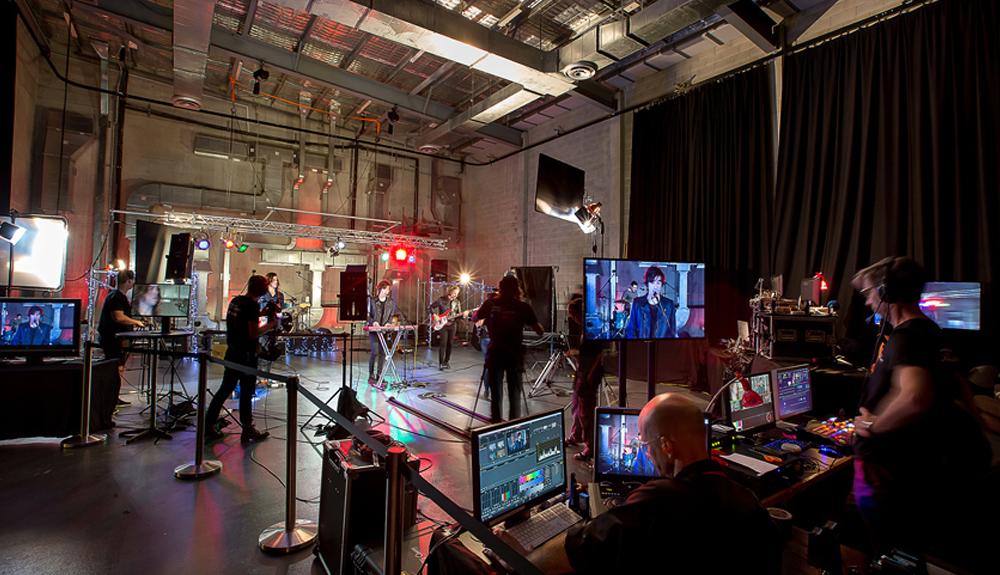
When Production Gets Complicated: Building a Smarter Workflow for Audio & Visual Teams
A production can look organized from the outside while being held together by spreadsheets, WhatsApp messages, calendar invites, shared drives, and someone's memory behind the scenes.
Consider a production company handling several commercial shoots in the same week. One project needs a studio on Tuesday, another needs the same lighting kit on Wednesday, three freelance crew members submit different versions of their hours, an editor is waiting for footage from the production team, and finance is trying to determine which expenses belong to which client project.
None of these tasks is particularly difficult on its own. The difficulty comes from their dependencies.
A studio booking affects the production schedule. The production schedule determines crew requirements. Crew hours affect project cost. Project costs affect profitability. Contracts determine who can work on the production and what they are paid. Licensing conditions can determine what can eventually be published.
When those relationships live in separate systems, small changes can become expensive administrative problems.
This is where an ERP environment such as Odoo, properly adapted to production operations, can become more than an accounting or project-management tool. Code-Ox helps production companies connect those operational relationships so that the information surrounding a production remains tied to the project it belongs to.
The Real Problem Isn't Booking a Camera. It's Everything Connected to the Booking.
Imagine a production company has five cameras, three lighting kits, two recording studios, and a pool of freelance crew. A producer books Camera A for a shoot on Thursday. Later, the shoot moves to Friday.
In a disconnected setup, changing the booking may require someone to update a calendar, notify the equipment manager, contact the camera operator, change the production schedule, and check whether Friday's equipment allocation conflicts with another project.
The booking itself is simple. The administrative chain around it is not.
Resource Booking as a Production Record
A more useful approach is to treat equipment and studio bookings as records connected to the production project rather than isolated calendar entries.
A production record can contain the project, required equipment, booking period, assigned resource, responsible team, and associated schedule. If the production date changes, the team can see which resources and people are affected instead of searching through several independent tools.
Code-Ox can help implement this kind of Odoo-based structure, adapting resource and project records to the way a production company actually allocates studios, cameras, lighting, audio equipment, and other assets.
Production Schedules Have Dependencies. Treat Them That Way.
A production schedule is rarely just a list of dates. A shoot may depend on location availability, equipment, talent, crew, studio time, and approvals. Post-production then depends on footage being delivered, reviewed, edited, and approved.
For example, if filming moves from Monday to Wednesday, the impact isn't limited to the production calendar. The camera crew may need to move, equipment needs to remain available, the editor's expected footage date changes, and downstream delivery milestones may need to move as well.
From a Timeline to a Connected Project
Instead of treating each activity as an independent task, production workflows can link tasks, resources, people, and deadlines to the same project.
That means a production manager can move from a project to its production tasks, assigned crew, equipment requirements, time entries, expenses, and post-production activities without reconstructing the project from different sources.
For a multi-stage production, this distinction matters. A project isn't simply a collection of tasks; it is a network of dependencies.
Code-Ox can adapt Odoo's project and planning capabilities around those dependencies, so the system reflects the company's actual production methodology rather than forcing producers to work around generic project-management screens.
Freelance Crew Management: Where Time Becomes Money
Production businesses frequently work with freelance camera operators, editors, sound engineers, technicians, designers, and other specialists.
Now consider a project where six freelancers work across four production days. If each person submits hours through a different method—email, spreadsheet, message, or paper—the finance team has to reconcile those records before payments can be processed.
That creates a second problem: the same hours also represent a project cost.
One Time Entry, Multiple Uses
A useful digital structure records a crew member's time against the relevant project and activity. The same time record can then support operational reporting and financial processing instead of being entered twice.
For example, an editor records 18 hours against Project A. Those hours become part of the project's cost information while remaining available for the payment or contractual workflow applicable to that freelancer.
Code-Ox can help connect these records within Odoo, reducing the need to maintain one version of crew hours for production management and another for finance.
Contracts Should Follow the Production, Not Sit in a Separate Folder
Audio and visual production can involve a surprisingly large number of agreements: freelance contracts, service agreements, equipment arrangements, licensing documents, talent agreements, and client contracts.
The problem isn't simply storing the files. It is knowing which agreement belongs to which project, person, supplier, or piece of content.
Suppose a producer needs to confirm whether a particular freelancer's agreement covers an upcoming production or whether a licensing arrangement applies to the intended distribution. Searching through a general document folder provides little operational context.
Linking Documents to Business Records
A stronger model associates contracts and licensing documents with the records they govern.
A freelancer contract can be associated with the relevant person and production. A licensing agreement can be linked to the relevant project or content. A service agreement can remain connected to the supplier or production activity it covers.
This turns document storage into business information rather than a digital filing cabinet.
Code-Ox can help design these document relationships within Odoo so that production teams can reach the relevant agreement from the operational record where it matters.
Post-Production Is Where Invisible Delays Become Visible
Filming may finish on Friday, but the project is far from complete.
Footage may need to be transferred, organized, edited, reviewed, revised, color-corrected, mixed, approved, and delivered. If one stage takes longer than expected, the delay can move through every subsequent deadline.
That makes post-production tracking especially important for companies handling multiple projects simultaneously.
Track the Work After the Camera Stops
A post-production workflow can divide the project into identifiable stages and tasks. Each task can have an owner, deadline, status, and relationship to the larger production.
For example:
- Footage received
- Media organized
- First edit assigned
- Internal review
- Client revision
- Color grading
- Audio mix
- Final approval
- Delivery
The value is not the list itself. The value comes from knowing which stage is currently blocking delivery and who owns the next action.
Code-Ox can adapt Odoo project workflows to production-specific stages, giving production managers a structured way to monitor work after filming has finished.
Project Profitability Starts Before the Final Invoice
A production can generate strong revenue and still perform poorly financially.
Consider a project originally estimated around a fixed client budget. Additional studio hours, equipment requirements, freelance overtime, reshoots, editing revisions, and other expenses can gradually increase the actual cost.
If those costs are only reviewed after the project is completed, management discovers the problem too late.
Connect Costs to the Project While It Is Still Running
Project profitability becomes more useful when revenue and costs can be examined while work is underway.
Equipment costs, crew time, production expenses, and other project-related charges can be associated with the relevant project. Management can then compare the expected economics of a project with its actual performance.
This creates a practical feedback loop: if a project is consuming more resources than expected, the team can investigate while there is still an opportunity to respond.
Code-Ox can help connect project management and financial information in Odoo so production companies can move from simply asking "What did this project cost?" to asking "Where is this project heading financially?"
Automating the Administrative Work Around Production
Automation is most useful when it removes repetitive coordination rather than trying to automate the creative work itself.
A production company may repeatedly perform activities such as sending booking confirmations, generating payment-related records, notifying teams about deadlines, updating project statuses, or moving information between systems.
Those are good candidates for automation because the rules are predictable.
Example: From Approved Work to Payment
Imagine a freelancer completes an agreed production assignment and submits the required time or service information. Instead of finance manually checking multiple records, a connected workflow can use the approved project record and contractual information as inputs for the next administrative step.
The objective is not to remove human approval where it is necessary. It is to eliminate the repeated copying and checking that surrounds that approval.
Code-Ox can identify these repetitive points in a production workflow and build appropriate Odoo automation or integrations around them.
What a Connected Production Workflow Can Look Like
Rather than thinking of ERP as a collection of separate applications, consider a single production moving through the system:
- Project created: Client requirements, budget, deadlines, and production information are recorded.
- Resources assigned: Required studio space and equipment are associated with the production.
- Crew scheduled: Freelancers and internal team members are assigned to relevant activities.
- Production begins: Work progresses against the production plan.
- Time and expenses recorded: Crew hours and project costs are attached to the appropriate project.
- Post-production starts: Editing, sound, color, review, and delivery stages become trackable project activities.
- Financial data accumulates: Project revenue and associated costs become available for profitability analysis.
- Contracts remain connected: Relevant agreements and licensing documents remain accessible from the associated business records.
The important point is that these aren't eight unrelated systems. They are different stages of the same production lifecycle.
Where Code-Ox Fits In
Odoo provides a broad foundation, but an audio and visual production company may need workflows that don't exist in a standard installation.
One company may primarily rent studios and equipment. Another may produce advertising campaigns with large freelance teams. A third may focus on post-production and licensing. Their operational models are different even though they all fall under audio and visual production.
Code-Ox can help translate those operational requirements into an Odoo-based system through implementation, customization, integrations, automation, dashboards, and supporting web or mobile applications where required.
The goal is not to add software for the sake of adding software. It is to model the relationships that already exist in the production business and make them usable inside one operational environment.
A Practical Example: One Production, One Source of Operational Truth
Imagine a production company managing a two-week commercial campaign involving a studio, multiple camera packages, six freelance crew members, an editor, a sound specialist, and several rounds of client revisions.
In a fragmented environment, the production manager might maintain the schedule in one tool, equipment bookings in another, freelancer hours in spreadsheets, contracts in cloud storage, and project costs in accounting software.
Now imagine the same project represented as a connected Odoo record.
The project contains its schedule and tasks. Equipment bookings are linked to the project. Crew time is recorded against project activities. Contracts remain associated with the relevant people and services. Post-production tasks follow the project through editing and approval. Financial information can be reviewed against the same project.
When the client adds another revision, the impact is visible as another project activity rather than becoming a new conversation disconnected from the original production.
That is the difference between digitizing tasks and connecting a production operation.
Why This Matters as Production Companies Scale
A workflow that works for three projects can become difficult to maintain at thirty.
More projects mean more equipment bookings, more freelancers, more contracts, more deadlines, more invoices, and more opportunities for information to fall between systems.
The answer is not necessarily to add another specialized application every time the company grows. A connected operational foundation can allow additional projects and resources to be managed within the same structure.
For growing production companies, that can be particularly valuable because operational complexity often grows faster than headcount.
Building the Operational Infrastructure Behind Creative Work
Technology will not replace the director's creative vision, the editor's judgment, or the production team's experience. What it can replace is some of the repetitive administrative coordination surrounding their work.
When equipment bookings, schedules, crew records, contracts, post-production tasks, and financial information are connected, teams spend less time reconstructing what happened and more time deciding what needs to happen next.
That is where an ERP becomes useful to a creative business: not by controlling creativity, but by giving creativity a stronger operational foundation.
Take the Next Step with Code-Ox
If your production company is managing equipment bookings in one place, crew information in another, project costs somewhere else, and contracts in separate folders, it may be time to map how those processes connect.
Code-Ox can help you assess those workflows and design an Odoo-based solution around the way your production business actually operates.
Whether the priority is resource booking, production project management, crew timesheets, post-production tracking, contract management, profitability analysis, automation, or system integration, the first step is understanding where information currently gets lost between teams.
Talk to Code-Ox about building a connected digital workflow for your audio and visual production business.